Ten Tips To Optimise Home Food Production🌱


By Graeme Sait
I am anticipating a food crisis within the next 18 months. It really feels like the perfect storm is brewing. The need to counter increasingly harsh extremes has become part of the playbook for food production. However, the super El Niño that will impact Australia within weeks should move stress levels up a couple more notches.
Indonesia is the first cab off the rank for this latest El Niño threat, and they are currently really suffering with drought, raging forest fires, dwindling water supplies, and horrendous air quality (from the worst ever smoke haze).
When this climate challenge is combined with rising costs and fertiliser scarcity, associated with the war in the Middle East, it is clear that we have serious problems coming.
I met at the governmental level in Eastern Europe last year, and concerns about food security were foremost in every discussion.
Perhaps it’s time to consider our personal, ongoing food security, and the obvious solution is to increase home food production for yourself and your family.
Your ultimate wellness tool
I have often referred to the home garden as “the ultimate wellness tool”, and the justification for such an extreme claim is fourfold:
1) Escaping the contaminants - this is your opportunity to produce genuinely healthy food without the chemicals. Many vegetable producers don’t eat their own produce, so why would you feed that compromised food to your family?
2) Fresh food at its very best - fruit and vegetables begin losing nutrition immediately after harvest. Á snow pea, for example, loses 50% of its vitamin C within 12 hours of harvest. When you have your own garden, you harvest only what you will eat for that meal. Then, you are consuming champagne food at its most nutrient-dense and medicinally active.
3) Food production as therapy - the phenomenon of Biophilia relates to our genetically determined need for time in nature. Gardening gives us that restorative time. However, the therapy effect is more nuanced. We now know that healthy soils contain microbes that release volatile biochemicals that stimulate the production of serotonin in the human body. Serotonin is the feel-good hormone, the absence of which is commonly linked to depression.
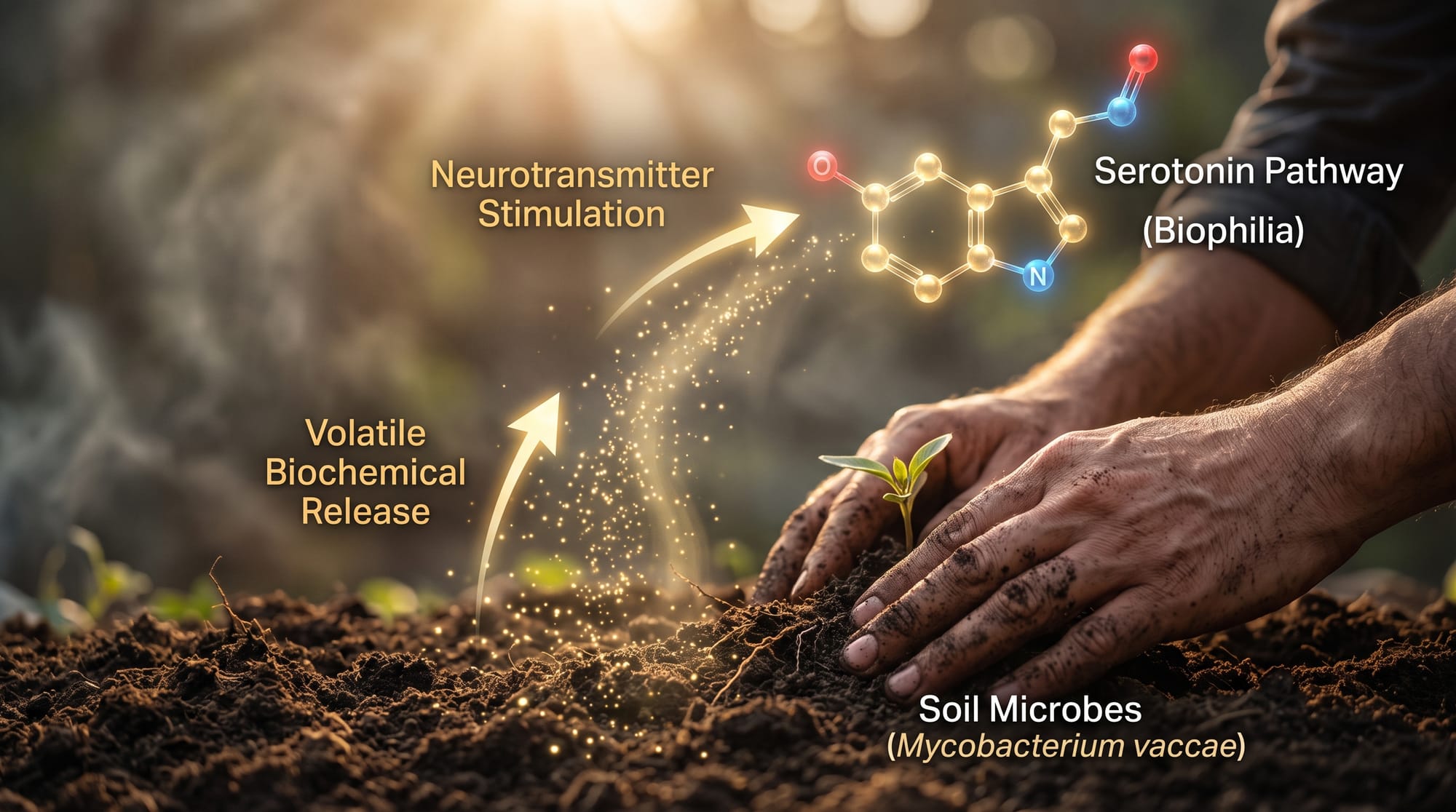
4) Use the garden as your gym - your vegetable garden can provide both aerobic and resistance exercise, without the gym fees and sweating neighbours. Instead, you get some all-important exercise amidst the birdsong, with the sun on your shoulder, the sweat on your brow, and a smile on your relaxed face. The broadfork is the greatest of no-till tools (Google it). It offers wonderful resistance exercise while gently aerating your soil. Barrowing mulch offers both forms of exercise, particularly if you do it quickly.
If you are a novice vegetable gardener, you may have experienced the deflation that comes with that spindly, insect-impacted first attempt. Many cite these failures as the reason that they don’t produce their own food.
In this two-part offering, I will provide a series of tips and strategies that will put a smile on your face, as you harvest and consume your own nutrient-dense, chemical-free food with forgotten flavours and greater medicinal qualities. Even complete novices can expect success with these guidelines.
Let’s begin with the idea of testing rather than guessing when setting up your soil to produce vibrant, resilient food crops. Let’s commence our list of the ten tips that will help you master problem-free food production.
The Ten Tips
1) Test your food-producing soil - my introduction to a better way came 30 years back as a weekend warrior on a small acreage. There were areas on that farm that were going nowhere fast, despite countless hours spent trying to turn them around. Then I decided to soil test the two main problem areas, and it was like a blind man recovering his sight. I was no longer driving blind, and the improvements came thick and fast. If you can give the plant exactly what it needs, it is not rocket science to recognise that you are going to produce better quality food with less stress.
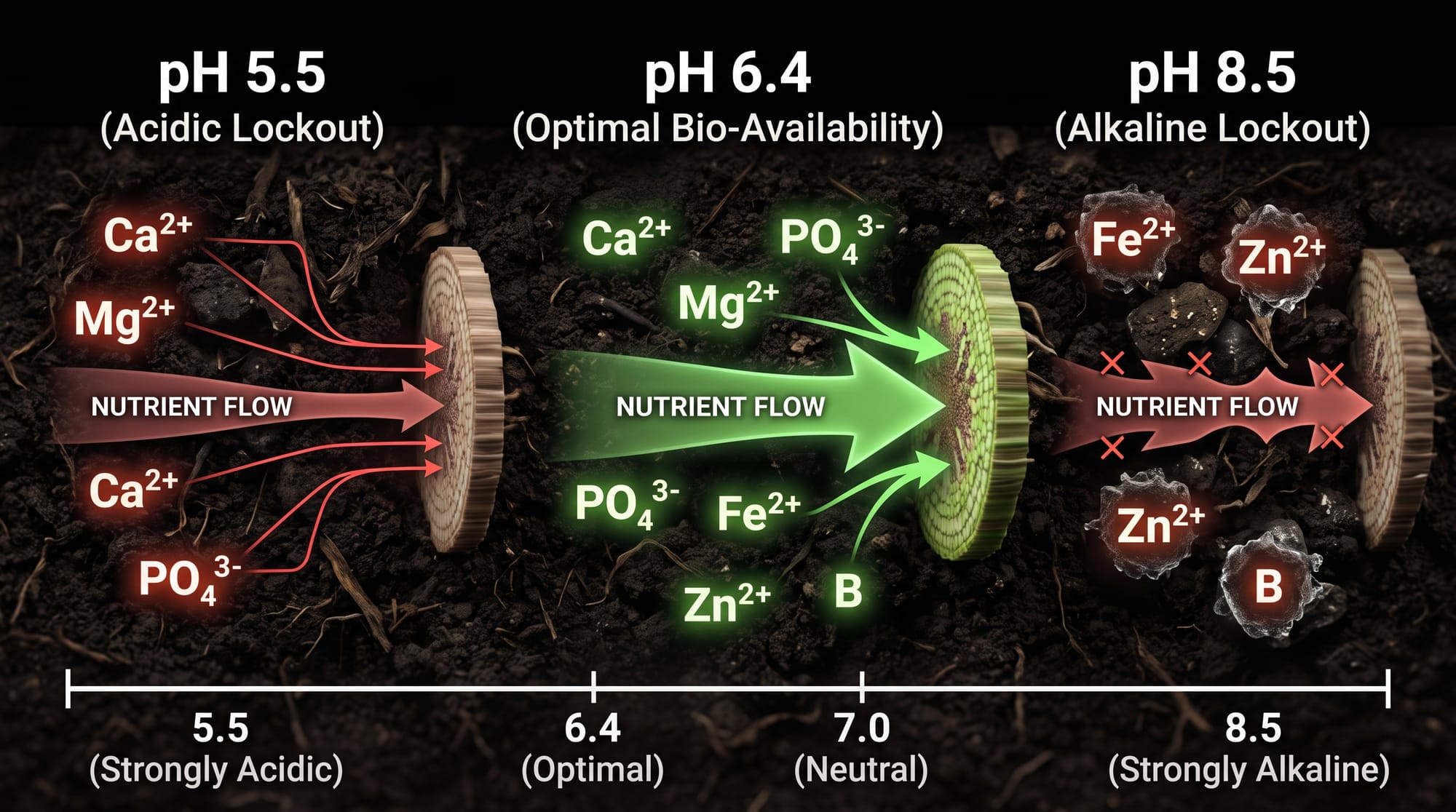
If you can’t justify the $150 for a comprehensive soil test, then at least check your soil pH. This single parameter can seriously impact nutrient availability and associated food quality. You might have a humus-rich soil that looks like a winner, but if the pH is just 5.5, because you have neglected liming, then there is a price to pay for this neglect. At pH 5.5, the uptake of nitrogen, phosphorus, calcium and magnesium is restricted. It’s important to realise that calcium, magnesium and phosphorus are principle bone building constituents for your family, while also being the most important players in the most important plant process of all - photosynthesis.
Soil pH is a logarithmic scale, where a drop of a single pH point means ten times more acidity.
The healthy, productive soil has a pH of 6.4, and at this pH, all minerals are most available.
You might have a high clay, high magnesium soil, with a pH of 8.5, and, in this instance, your alkaline soil will be compromising the uptake of iron, zinc, manganese, copper and boron. In this instance. You would foliar spray these missing minerals to bypass the soil-based antagonism.
So, how do you measure your soil pH, and how can that soil pH be corrected, if it is way off mark?
Testing your soil pH
You can use a pH meter or a pH strip from a local pool shop to check your soil pH, and here’s how it’s done. Add equal parts of soil and deionised water to a screw-top jar and shake the contents vigorously for I minute. Now let the jar sit for five minutes and then dip your pH meter or pH strip into the slurry. Deionised water is important because you don’t want any influence from minerals that may be present in tank, town or bore water. You can source a cardboard cask of distilled water from the supermarket for $7 and leave it in the shed for future testing.
Now, let’s assume that your soil pH is 5.5. How do you action this needed correction? If you were a farmer using our Soil Therapy service, then the liming requirement is quite specific based on the relative clay component of your soil. Here, a more generalised, educated guess may be needed.
If you have a lighter, sandy loam soil, then the suggestion would be to apply lime at 2 kgs per 10 sq meters of your garden. If it is a heavier clay soil with a pH of 5.5, then that requirement might be 4 kgs of lime per 10 sq meters. If that clay was particularly sticky, then you might add the clay breaker, gypsum, with the lime, at a rate of 2 kgs per 10 sq meters.
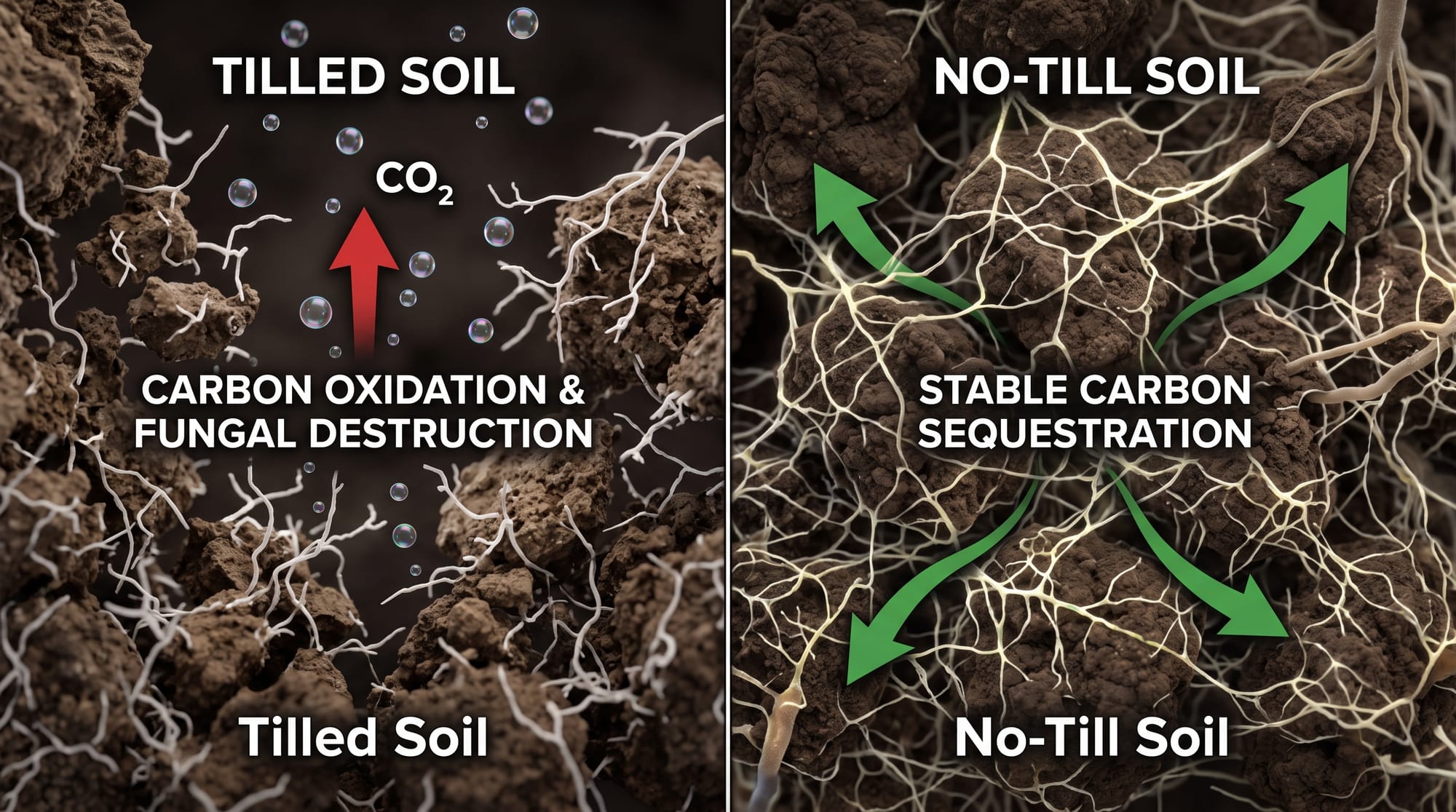
2) Minimise digging and mulch your garden - the old school concept of working your soil up into a fine tilth, a couple of times a year before planting, is now very much frowned upon. If we are using our garden to capture carbon, then opening up that soil with a spade or a cultivator will be counterproductive. Every time you work the soil, you introduce oxygen into the equation and oxidise some of your precious humus. If you dig the soil when it is wet, then you have quadrupled that carbon loss. However, tillage also slices and dices the beneficial fungi in your soil. Ironically, they are the very creatures that create natural tilth via the creation of crumb structure. They are also responsible for creating stable carbon that lasts at least 35 years in your garden (and out of the atmosphere), and they hate the intrusion of cold steel. No-dig gardening has become an essential environmental priority, and that involves the heavy use of mulch and compost.
Vermicompost is the best of all composts, but any well-finished compost is good. The best of all mulches is lucerne, or alfalfa mulch, if you live in North America. This high-protein, soil food is a great fertilising mulch loved by all soil organisms. However, it is the earthworms that go ballistic in its presence. Lucerne hay houses an abundance of protozoa, which are the favourite food of earthworms. If you want to encourage large numbers of these oxygenating, fertiliser machines (that also make their own lime and incubate their own beneficial biology), then lucerne mulch is your best tool.
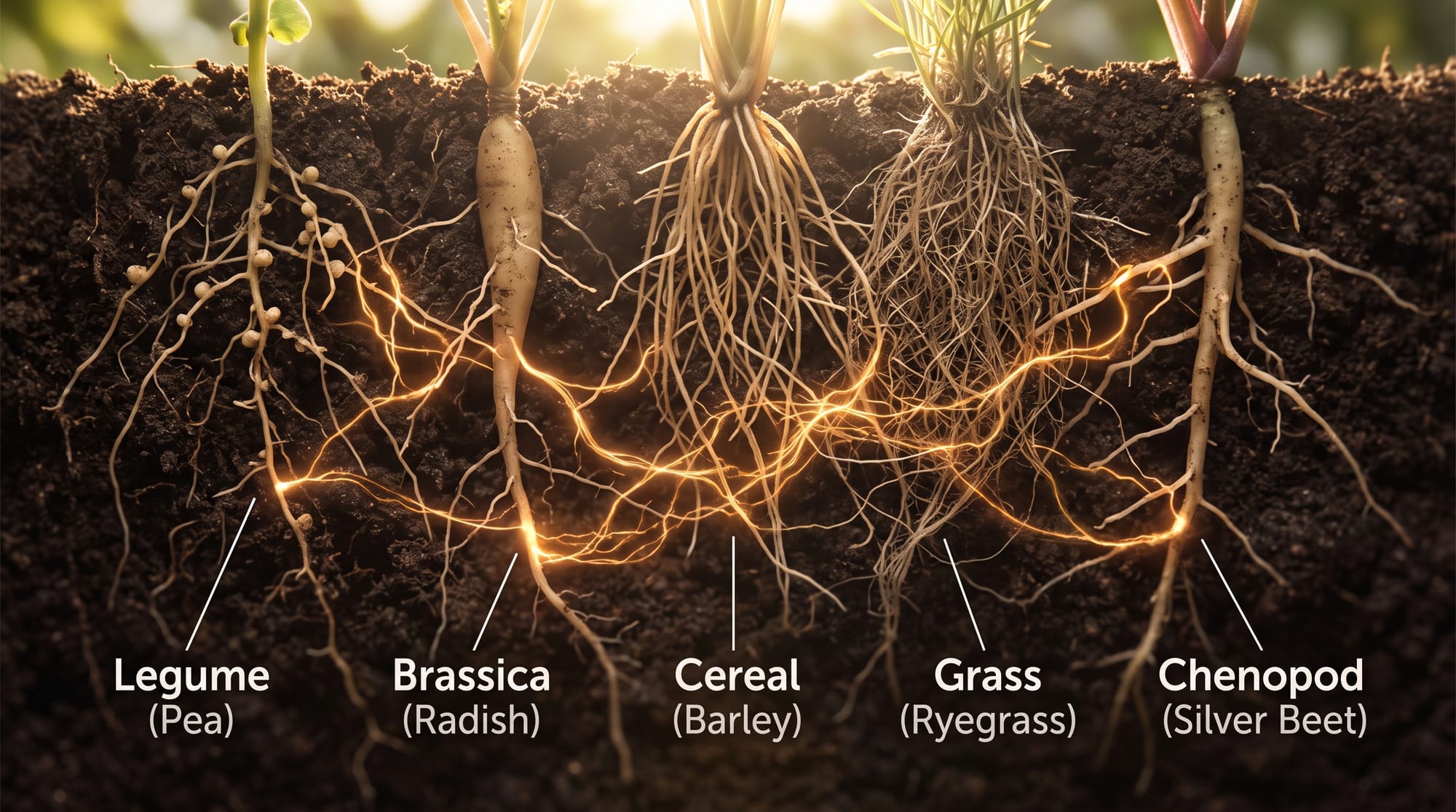
3) Plant a living ground cover - part of the rationale of mulching relates to covering and protecting the soil from extremes, while better retaining moisture and also feeding the biology beneath. However, there is a second, carbon-building, soil protective strategy that is at least as effective. That involves planting a multi-species cover crop in your garden to provide a living mulch cover. Biodiversity is the central principle in nature, and you will soon learn how observing this, “more the merrier”, mantra can deliver in spades (excusing the pun).
Research into cocktail cover crops in agriculture has revealed that if we can include five species in our cover crop, then something quite special occurs. Those five species include cereals, grasses, legumes, brassica and chenopods. Chenopods involve a small group of plants, including everything from the beet family, quinoa, amaranth and spinach. The finding from the USDA is that only when all five species are in the mix do the plant roots begin messaging each other, and this triggers an outpouring of phenolic compounds into the soil. Just as our bodies respond positively to these antioxidants, the soil life also sings in their presence. You can even make your cocktail cover crop an edible salad, particularly if you harvest some of it young. Here are some of the kinds of plants you might include. Peas might be part of the legume equation, as they can be eaten young, or when flowering, or we can consume the pods. Radishes might be our brassica component, along with some kale. Wheat and barley might be our cereals, as a portion can be consumed young for green juices, involving wheat grass or barley grass. Ryegrass can be the grass component, and silver beet can be our chenopods.
Here’s a 400-gram, 100 sq meter recipe that will work well to produce an edible, multi-species cover crop. You can increase or decrease the components depending on the size of the area you are planting.
Combine 150 grams of pea seed with 100 grams of ryegrass seed, 100 grams of wheat and barley seed, 30 grams of radish seed and 20 grams of silver beet. Typically, the brassica component should not exceed 6% of the mix, and the chenopods should be no less than 20 grams. If you can add more variety, it is even better. Plants gift the soil with 30% of their glucose produced from photosynthesis, but this exudate is not just a sugar treat. Each plant has different nutrient requirements, so all exudates are laced with food to encourage the microbes that will deliver each plant's unique requirements. In this manner, increased diversity above ground delivers increased diversity below ground, and your soil is humming.
It’s also important to realise that at the conclusion of that cover crop cycle, plant roots are the part of the plant that is most easily converted to humus. The dead roots are there, beneath the soil, where all the carbon building action is happening. For that reason, large rooted species like lucerne, daikon radish and sunflower might also be included in your 400 gram blend.
NTS now offers a comprehensive, multi-species cover crop blend, in one kg buckets, within our Life Force Nutrition Gardening range. This new offering, retailing for $19.95, provides sufficient seed to cover at least 250 sq meters. It may not yet be on the website, but it can be accessed by calling NTS on 07 5472 9900
4) Embrace Compost - herein lies another environmental benefit. One of the largest sources of methane gas (23 times more thickening of the blanket than CO2) is rubbish tips. This is largely due to consumers combining organic material with inorganic material in their rubbish bags and creating methane generation during anaerobic decay at the rubbish tips. Recycling all organic matter as compost can address this serious greenhouse gas issue with a double whammy. We also stimulate humus production in our gardens with that compost.
That is perhaps the biggest benefit of compost. It can help your soil reclaim its carbon-building potential by reintroducing the vast diversity of organisms responsible for that task. In one US study, a tonne of compost per acre, per year, for 3 years, resulted in an organic matter increase of 1.35%. A soil with existing organic matter levels of 2%, that now has 3.35%m has increased humus by over 60% with a very fine sprinkle of compost each year. (remembering that one tonne per acre is just 1 kg per 4 square meters) The total of 3 tonnes of compost per acre, applied over three years, only supplies enough actual carbon to account for a rise of just 0.15%. How did we build 9 times more carbon than what was actually applied? That’s the beauty of compost!!! The army of organisms it delivered created that carbon. In this context, governments should be incentivising farmers to make compost or use compost. Similarly, councils should recognise their responsibility, separate waste streams, compost all organic waste and penalise anyone contaminating that potential compost stream. I reckon a $5000 fine for any rate payer tossing a can into their organic matter bin might just do the job. Draconian, I hear you say. Well, we are in a crisis and draconian works!
I guess I can’t discuss compost and humus building without mentioning one of my favourite NTS Products, LifeForce Carbon. This is microbe-packed, fertilising compost involving the decomposition of brown coal (humates). This particular brown coal contains 68% carbon and over 70 % humic and fulvic acids. If you are not yet familiar with the benefits of humates, here is a one-sentence summary (he could never keep anything down to one sentence, I hear you thinking, and you’re probably right)
Humic and fulvic acids are powerhouse natural plant growth promotants and soil life stimulants that also increase nutrient uptake by 30%, while improving soil structure and reducing nutrient leaching.
It is quite a challenge to make a compost with such high carbon levels, due to the need for higher protein (nitrogen) to break down the carbon and release the humic and fulvic acids. We have supplied this extra protein via the inclusion of food scraps from restaurants, which often contain more nitrogen than animal manure.
In my gardens and on the farms, I use 50/50 LifeForce Carbon with LifeForce Gold (a pelletised, all-inclusive, composted fertiliser) on all new plantings. We are currently planting ginger, turmeric, and galangal on one farm, and yacon at the other. Carbon and Gold will be the starter fertilisers in both locations.
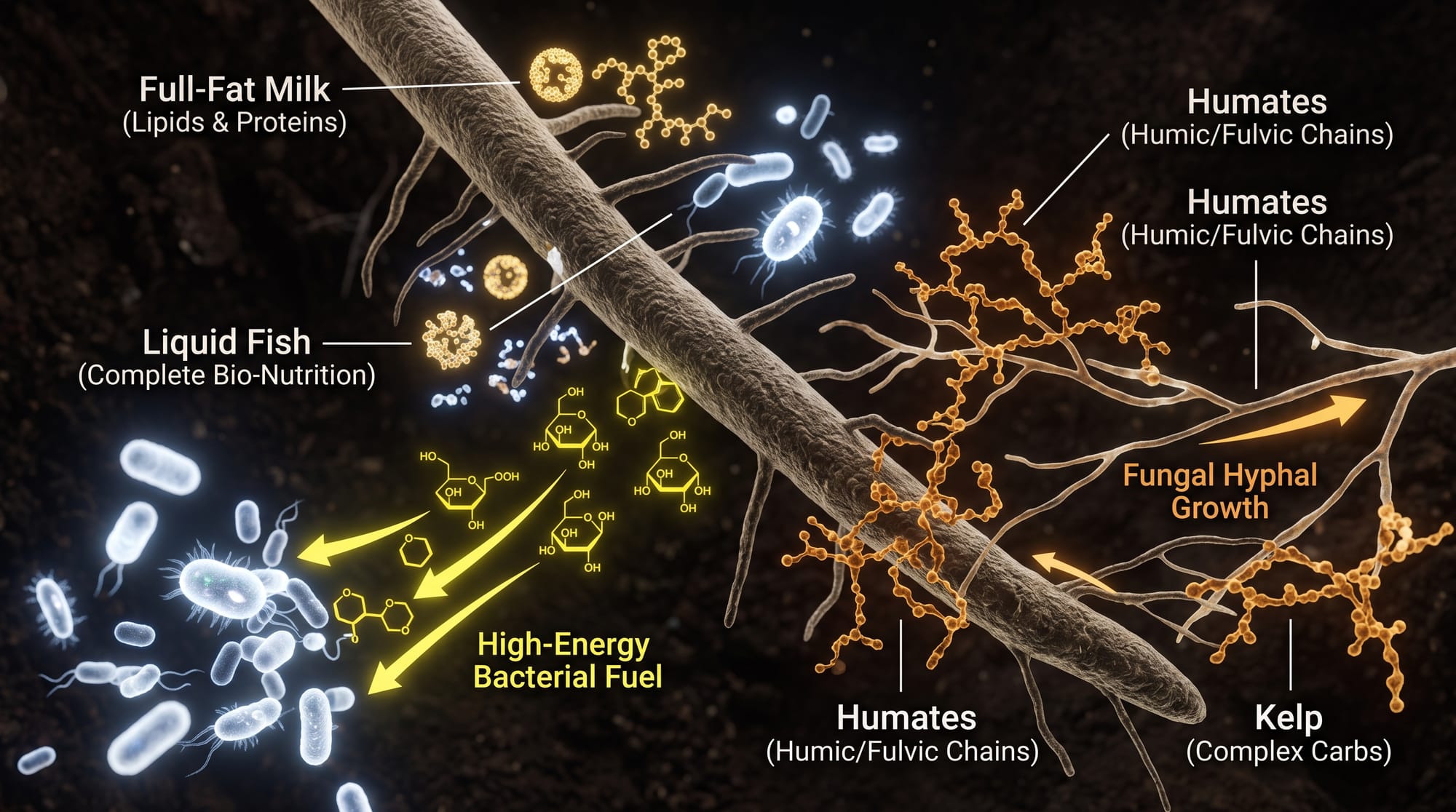
5) Feed your soil life - just like your gut organisms thrive when you feed them prebiotics, soil organisms respond similarly when fed certain stimulants. What are the best microbial foods we can use in the soil? There are five readily accessible “prebiotics” that can help put beneficial soil life into hyperdrive.
These include full-fat milk, molasses (or even table sugar), liquid fish fertiliser, humates, and kelp. Let’s dissect these inputs.
Microbes prosper on complete foods containing good levels of fat, carbohydrates and protein, just like our family, or our pets. Fish and milk qualify as complete foods, as long as it’s full-fat milk, rather than the low-fat nonsense that is a negative in all diets. Molasses is like a high-carb energy source. Humates and kelp tend to be more hormonal stimulants, but humic acid and kelp contain long-chain carbohydrates that predominantly stimulate beneficial fungi. Fulvic acid is ten times smaller than humic acid, and it is more of a bacterial stimulant.
A perfect soil food, in this context, is our product, “Seachange KFF”. As the name suggests, it features high levels of liquid fish, supported by kelp and fulvic acid, and it also contains the remarkable plant growth promoter, triacontanol. If you were to include a little milk and molasses in the same watering can, you would have all bases covered.
Well, my friends, that completes part one of this two-part story.
Until the next Nutrition Matters blog, I wish you all things good.
Warm regards
Graeme
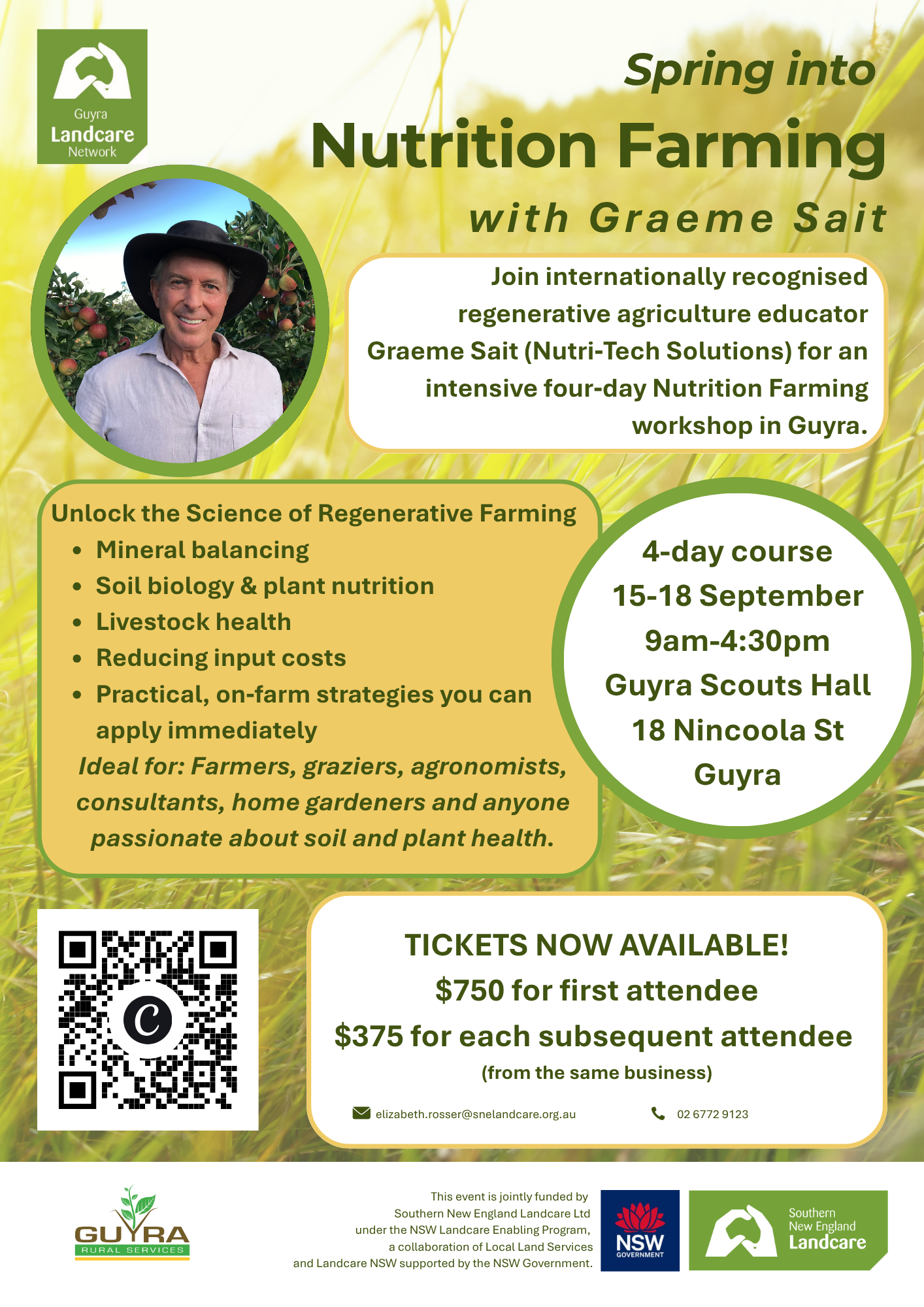
Spring into Nutrition Farming – Graeme Sait
15–18 September | Guyra, NSW
What: Spring into Nutrition Farming Workshop with Graeme Sait
Join internationally recognised regenerative agriculture educator Graeme Sait (Nutri-Tech Solutions) for an intensive four-day workshop on the science of regenerative farming. Topics include mineral balancing, soil biology, plant nutrition, livestock health, and practical on-farm strategies to reduce input costs. Ideal for farmers, graziers, agronomists, consultants, home gardeners, and anyone passionate about soil and plant health.
When: Tuesday, 15 September – Friday, 18 September, from 9:00 am to 4:30 pm daily
Where: Guyra Scouts Hall, 18 Nincoola St, Guyra, NSW
Cost and registration:
Tickets: $750 for the first attendee, $375 for each subsequent attendee (from the same business). Scan the QR code on the event flyer to register.
For inquiries, contact Elizabeth Rosser at 02 6772 9123 or via email at elizabeth.rosser@snelandcare.org.au.

SeaChange KFF™
A blend of ocean essentials enhanced with fulvic acid and growth promotants.
A unique combination of kelp, fish and fulvic acid in a proven formula, which is further boosted by the addition of plant growth promotants.
Key Performance
- Kelp, fish, fulvic acid and growth promotants
- Healthy, balanced growth
- Ideal rescue remedy.
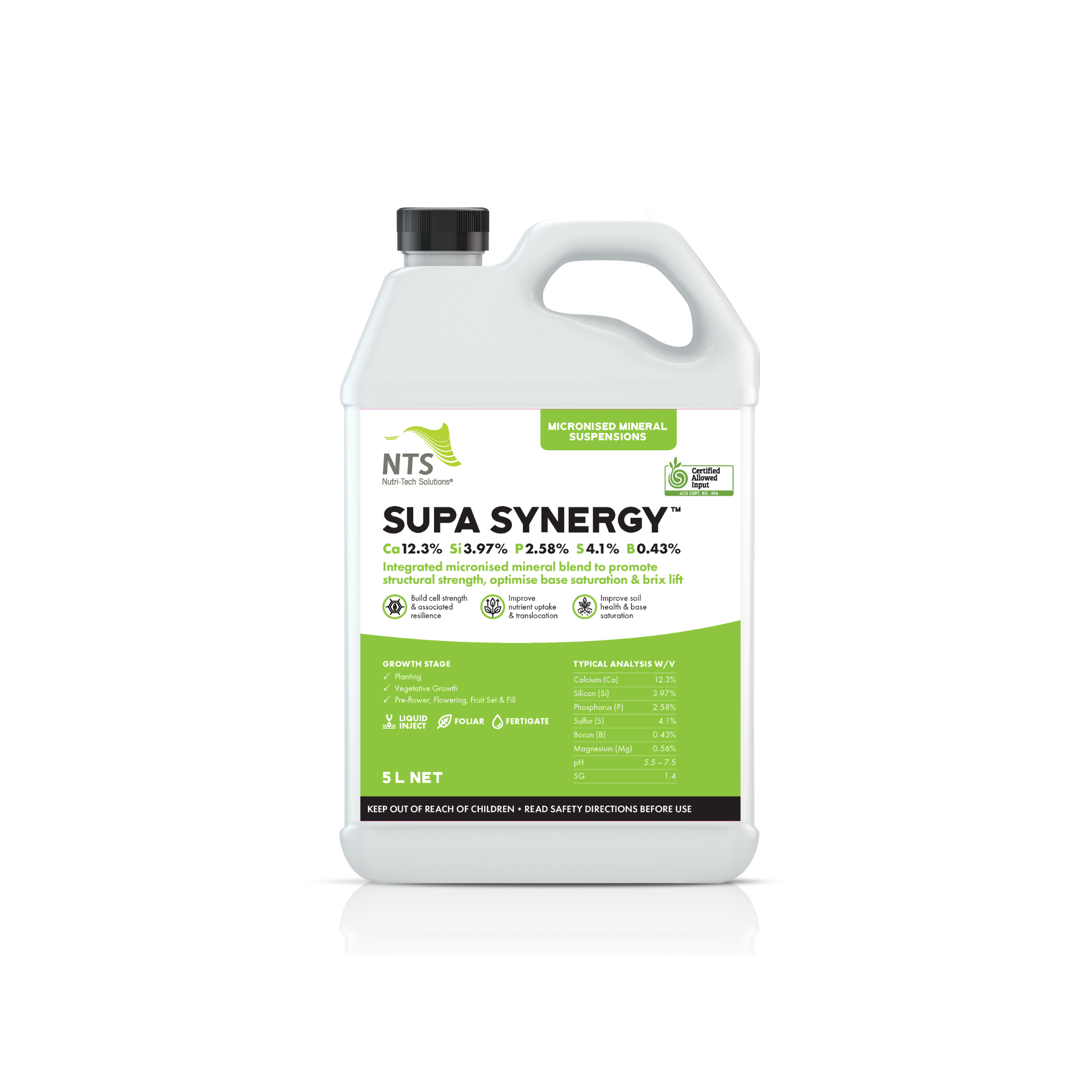
Supa Synergy™
Integrated micronised mineral blend to promote plant cell strength, optimise soil nutrient balance, and increase Brix.
Supa Synergy™ is an integrated micronised mineral suspension designed to strengthen plant structure, optimise base saturation and lift Brix across a wide range of crops. It delivers highly available calcium, silicon, phosphorus, sulphur, boron and magnesium to support cell wall integrity, resilience and efficient nutrient uptake and translocation. Supa Synergy™ can be applied via soil, fertigation, liquid injection or foliar spray, making it a flexible tool for both soil regeneration and in-crop nutrition. Regular use supports improved soil health, stronger plants and more productive, resilient farming systems.
To order or learn more, call NTS on (07) 5472 9900 or email sales@nutri-tech.com.au.
Certificate in Nutrition Farming
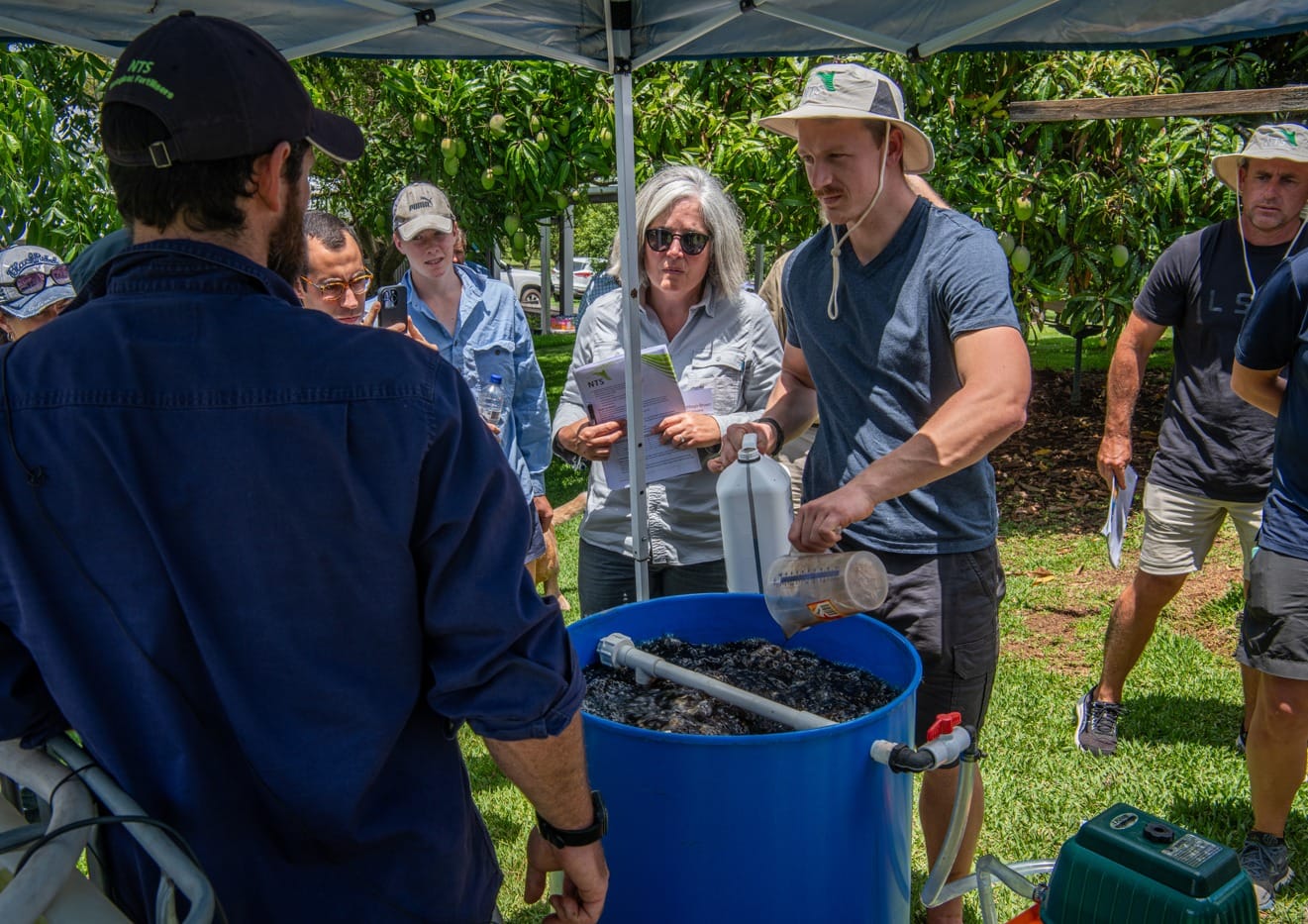
Our next iconic, five-day Certificate in Nutrition Farming® course is scheduled for November 2026: Monday 2nd - 6th.
Did you know that government subsidies are available for farmers via the Farm Household Allowance? Check it out here... https://www.servicesaustralia.gov.au/farm-household-allowance
Our last course was attended by growers and consultants from six countries. It was a wonderful learning opportunity where attendees enjoyed a wealth of education and inspiration from both our presenters and their fellow attendees. We only accept 40 bookings for these courses, so please register if you would like to attend.