Silica - The Cell Strengthening, Immune Enhancer 🌱

By Graeme Sait
We might begin this latest blog with some insightful words from the great farmer/philosopher, Wendell Berry. The following words might help you reconnect with the profound importance of your role as a food producer.
“The soil is the great connector of lives, the source and destination of all. It is the healer and restorer and resurrector, by which disease passes into health, age into youth, death into life. Without proper care for it, we can have no community, because without proper care for it, we can have no life.”
We farmers, are involved in the greatest of human endeavours. We are charged with restoring a below-ground community that is bordering on broken. The satisfaction that comes with that restoration is like no other. You will then understand the profound nature of your chosen path, and once you are on this regenerative path, there is no going back.
Ok, that’s my little sermon for this week, now let’s talk about the missing mineral, silica, and how it can make your farming endeavours less stressful
Multi-function mineral
Silica is the most abundant mineral in the soil, and yet it is not considered an essential mineral for plant health. That omission was largely based upon minimal research, but that situation has changed with 9 International Silica Conferences in the past ten years. Silica is now widely recognised as a critically important component of plant health and protection.
Monocots like cereals and grasses contain much more silica than dicots, like tomatoes and cucumbers. In fact, rice contains more silica than nitrogen.
However, regardless of species, all plants utilise silica to boost cell wall strength. The cell strength story diffuses into several benefits beyond disease and insect protection. Increased stem strength, for example, reduces lodging in cereal crops, and this can result in much lower losses at harvest time.
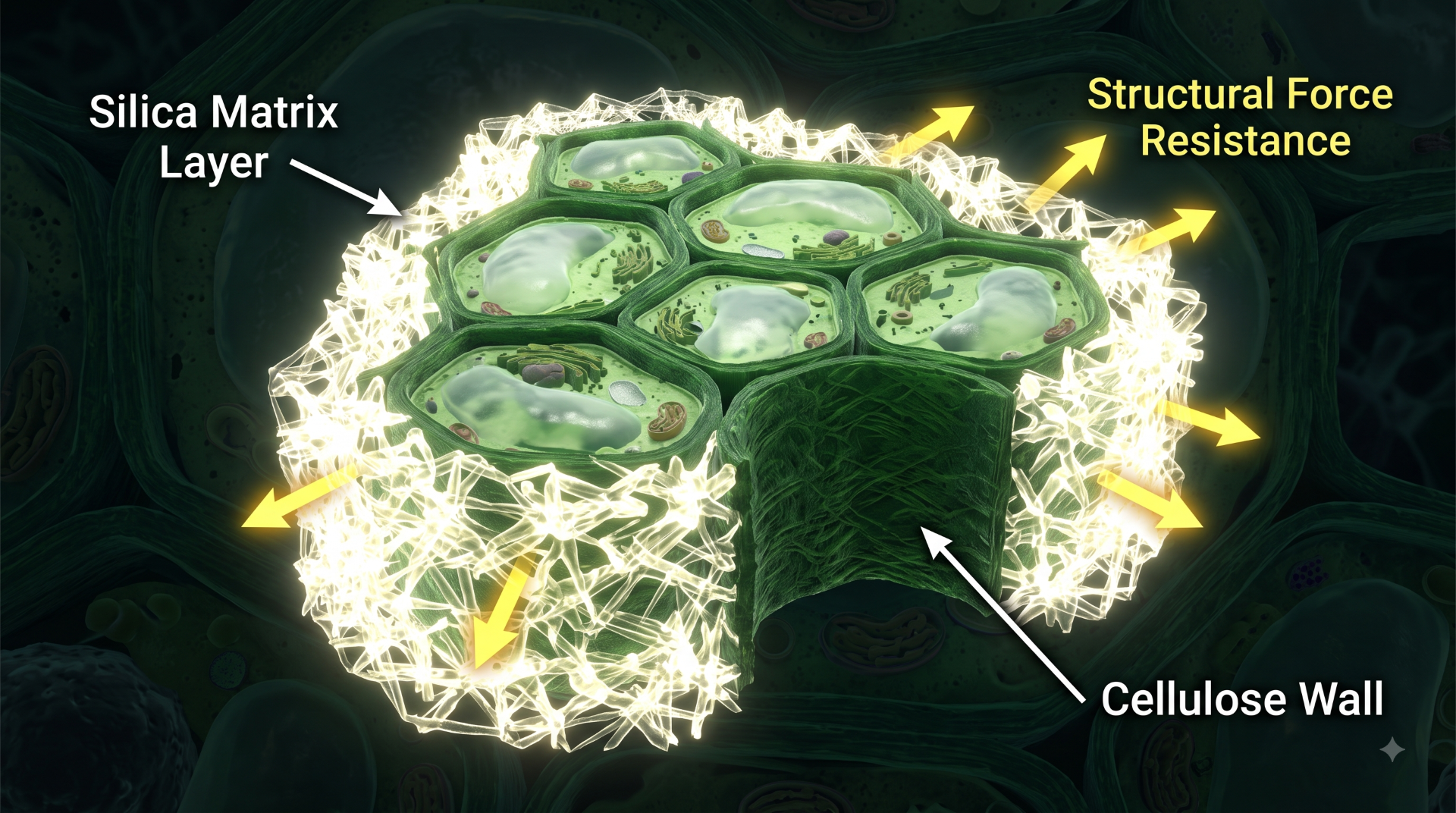
Silica is a primary component of phloem and xylem, the pathways into and around the plant. Both nutrient translocation and water uptake are improved when these pathways are silica-enhanced.
Photosynthesis improves when strong, upright stems better present the solar panel leaves, to more efficiently capture both sunlight and CO2.
Silica helps alleviate climate stress and frost damage. There is no shortage of both of these challenges in our changing world.
In acidic soils, Silica reduces the availability of toxic elements like manganese, iron and aluminium, and it can also increase resistance to salt stress.
Just lingering on the salt stress story for a little longer. We find that the best way to counter the damage associated with saline irrigation water is to fertigate with a little humic acid and soluble silica. Humic acid buffers the sodium, while silica can help immobilise this unwanted excess.
Silica can also significantly counter heavy metal problems like cadmium and lead, and it can even help if you have oversupplied zinc.
However, the biggest gain associated with silica may be its newly discovered role as an immune elicitor. We shall talk about this shortly.
The plant available form of silica is called monosilicic acid, and it has been determined that a healthy, disease-resistant soil requires 100 ppm of this form of the mineral. The vast majority of the soils we test have less than a third of this requirement. However, we do find that soils farmed regeneratively can have double the levels of those farmed conventionally.
There are a couple of likely explanations for this difference:
1) Biology is more active in an environment with reduced farm chemicals. Bacillus and Pseudomonas bacteria, for example, can decompose aluminosilicates and increase soil levels of plant-available silica.
Both of these species can be brewed on the farm, so this can be a biological strategy to increase soluble silica levels in your soils.
2) There is more phosphorus release in a biologically active soil.
There is a really interesting interplay between phosphorus and silica that was first identified by Reifenberg and Buckwold right back in 1954. They showed that applied silica can increase the availability of P, and the opposite is also true. It is about clay chemistry, where these two anions compete for sites, and one can effectively displace the other into the soil solution.
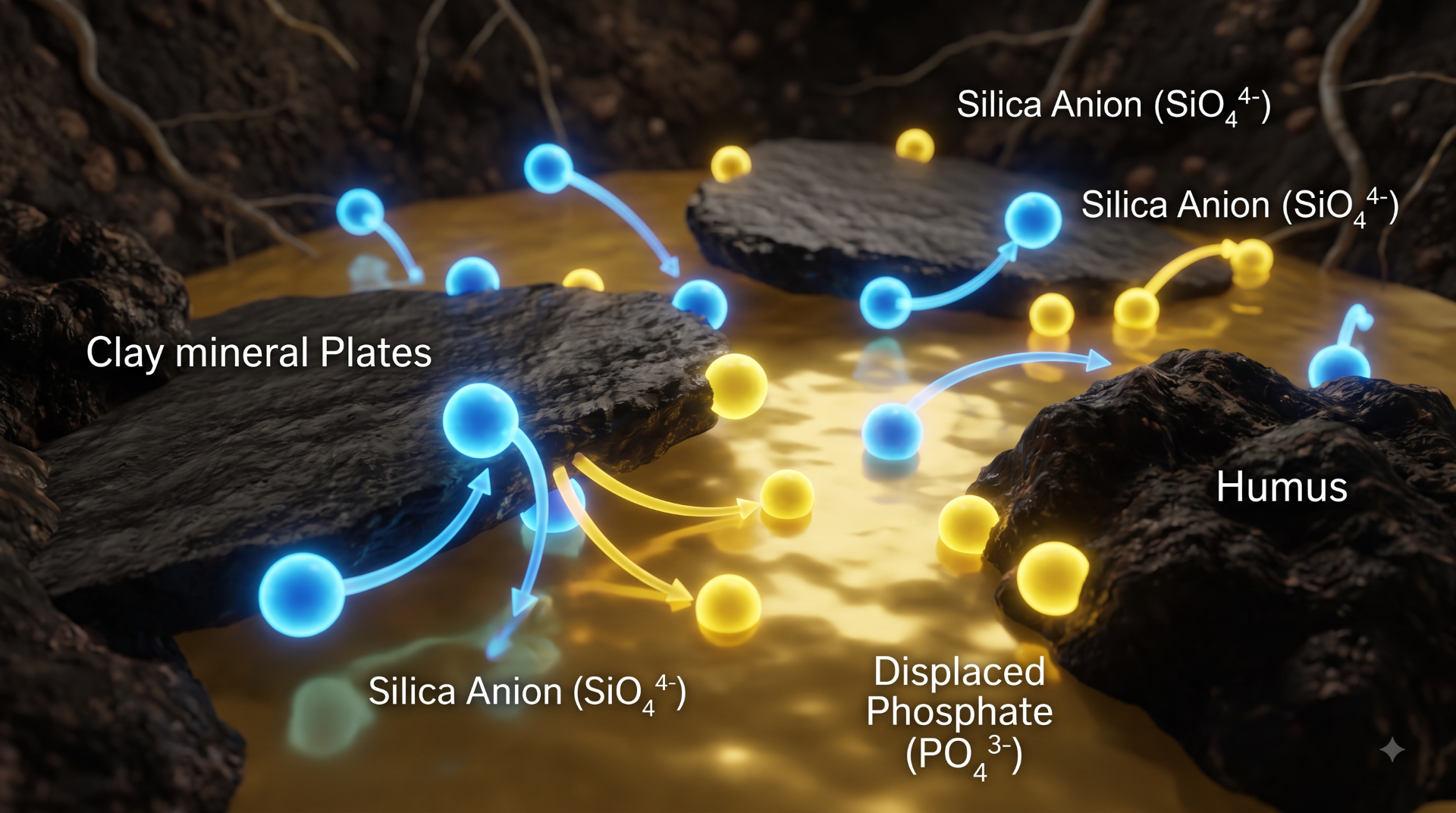
It’s a nice outcome when you apply micronised diatomaceous earth in liquid form (Dia-Life) and see a spike in plant-available phosphate.
It’s like the way calcium and magnesium can displace each other on the clay colloid, as part of the cation-balancing process.
It is a little like zinc and cadmium in the human body. Cadmium is a primary root cause of prostate cancer, which is fast becoming the largest cause of premature death in developed countries.
Both zinc and cadmium like to accumulate in the prostate gland, but zinc has the capacity to displace cadmium, so that it can be excreted. That’s a major reason why you all need to be taking 30 mgs of chelated zinc immediately before bedtime. Please excuse the digression, but it might be helpful to some of you.
Silica and plant disease
Silica is now widely used to control plant disease. There has been considerable published research relative to this control, in several important crops including rice, cucurbits, grape, wheat, corn, sorghum and turf grass.
Powdery mildew, for example, has been selectively managed with silica in all of those crops.
It is amazing to see the benefits associated with introducing soluble silica to hydroponics. In a soil- less growth medium, there is zero silica cycling, and one might think there could be problems, and of course, there are. Nutrients are applied in this system via Tank A and Tank B. They must be separated largely due to the incompatibility of phosphorus and calcium, which tend to bind up and become insoluble if applied together.
Potassium silicate is actually incompatible with minerals in both Tank A and Tank B, so it must be introduced via a third tank. This is no big deal because tank C can be as simple as a 200 litre drum from which the soluble silica is dispersed. Just like the soil requirements, you aim to deliver 100 ppm of soluble silica and oh my goodness. You need to see what happens regarding powdery mildew on cucumbers. We use the tank C additive to introduce other components that can significantly increase the nutritional value of hydroponic food. These include inputs like worm juice, amino acids, triacontanol, humates and kelp.
Potassium silicate is actually incompatible with several other minerals, so it needs to be foliar-sprayed or fertigated by itself. This is seen as a negative by many growers, and that is why so many favour micronised DE. It is actually compatible with everything, but we will talk more about that input later.
If we look at research into disease management with silica, we see the following:
Anthracnose has been successfully managed on multiple crops, including flowers, curcupids and cereals.
Leaf spot and black spot have been controlled on roses, peas, cucumbers and rice.
Fusarium, Pythium, Rhizoctonia, Alternaria and Phytophthora have all responded to silica treatment in multiple crops.
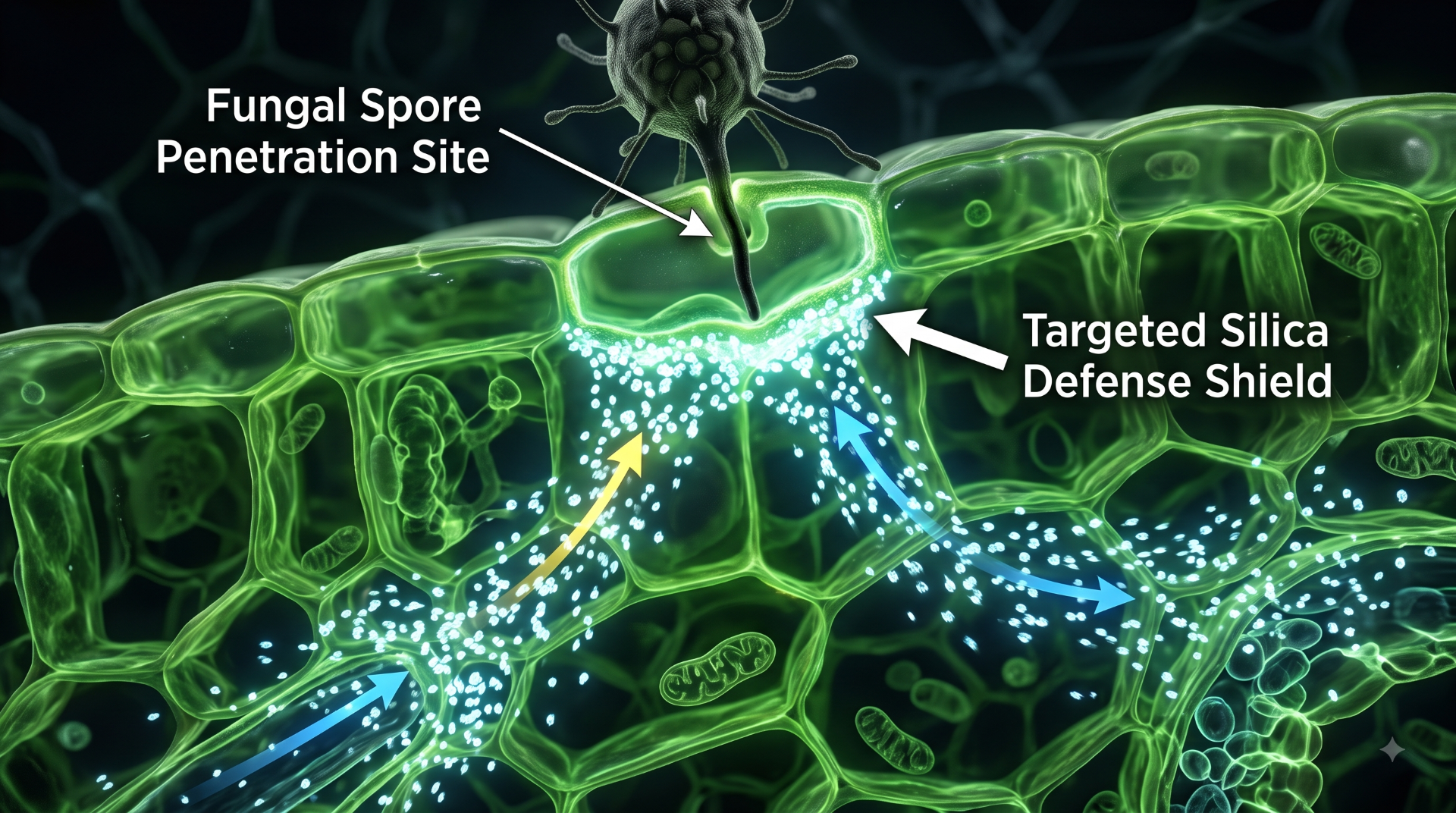
Here’s something pretty cool. It has also been found that applied silica can reduce the spread of disease, with significant reductions in spore germination and colony formation. It has been shown that, if silica is present at good levels in the plant, it can be mobilised and sent to strengthen the cell walls, specifically around the attack site. This explains, hence, the marked reduction in what is called the epidemic rate in silica-treated crops.
Silica as an immune elicitor
Ok, hopefully you are now grasping the significance of this missing mineral. The soil is full of it, but there is not enough soluble silica to sponsor pest resistance in our crops. How do we address this shortage? Are we obliged to invest in silica fertilisers? If we choose this option, what are the best sources? Are there other options to release our huge frozen reserves,
First, let’s look at the fertiliser option. Now you might be thinking. “Why is he calling silica a fertiliser? A fertiliser builds yield, and this is just a mineral that strengthens the plant”.
Now we get to the truly exciting part of the silica story. The other major strategy, when it comes to reducing the need for protective chemicals, involves boosting plant immunity. There is now a vast body of fascinating research relative to the plant fighting its own fight to protect itself against invaders. The plant has a measurable immune capacity, and if we can boost that capacity, there is a wonderful win/win. Not only do we reduce the need for toxic chemicals, but we will also see a fertiliser-like yield response. Why is that? It is because all known immune elicitors also increase yield. I’ll repeat that, there are no exceptions; if it boosts immunity, it also boosts production.
Conversely, anything that compromises plant immunity reduces yield. Now that is the big unspoken story relative to fungicides.
A few years back, I had the pleasure to dine with a couple of senior scientists who had spent a great deal of their careers evaluating multiple fungicides, relative to their safety, efficacy and suitability for registration. Over a couple of bottles of wine, they chose to share a secret. They asked me not to tell anyone, but I didn’t promise. I’m probably not the best person to keep secrets, he! he!.
They confided a disturbing finding. In their entire careers, they had not worked with a single fungicide that had not depressed yield. You may have defended your crop with the chemical, but there was a price to pay, and you were never made aware of that cost. If you were to proactively treat half the field with a fungicide as a preventative, and leave the other half untreated, and you did not experience any disease pressure that season, the treated half would yield less. That sounds like another pretty good reason to explore root causes and solve your problem, rather than treating symptoms with chemicals.
What is the best Silica input?
Let’s get back on track, and let’s evaluate the various silica inputs. There are a variety of mined, dry mineral fertilisers on the market, and some are in a more user-friendly granular form. They vary in terms of the availability of the silica component, but there are some good ones available. This is more of a longer-term, slower-release option. You can also find silica-based ash materials like slag, which deliver silica really well. It’s just important to ensure that these materials are free from heavy metals.
If you need fast-food silica to stop a disease in its tracks or to fast-track the protection from cell wall strengthening, then the liquid options may be more suitable. They can be used as foliars or through fertigation. Potassium silicate is a popular option, but there are now several other foliar options. Photo-Finish from NTS is one of those. This popular liquid fertiliser combines a suite of plant growth stimulants along with soluble silica.
A proven liquid solution involves a liquid suspension based upon micronised diatomaceous earth (DE). It is called Dia-life, and it is tremendously effective in increasing tissue levels of silica when fertigated at quite low rates. You can watch those silica leaf levels climb up almost immediately.
DE was formed when ponds full of creatures called diatoms were entombed by geological upheavals, eons ago. All that now remains is their outer shell, which is 85% silica. This accumulation of trillions of silica skeletons looks a bit like natural gypsum, but if you put it under a microscope, it looks like a maze of super-abrasive, broken razor blades.
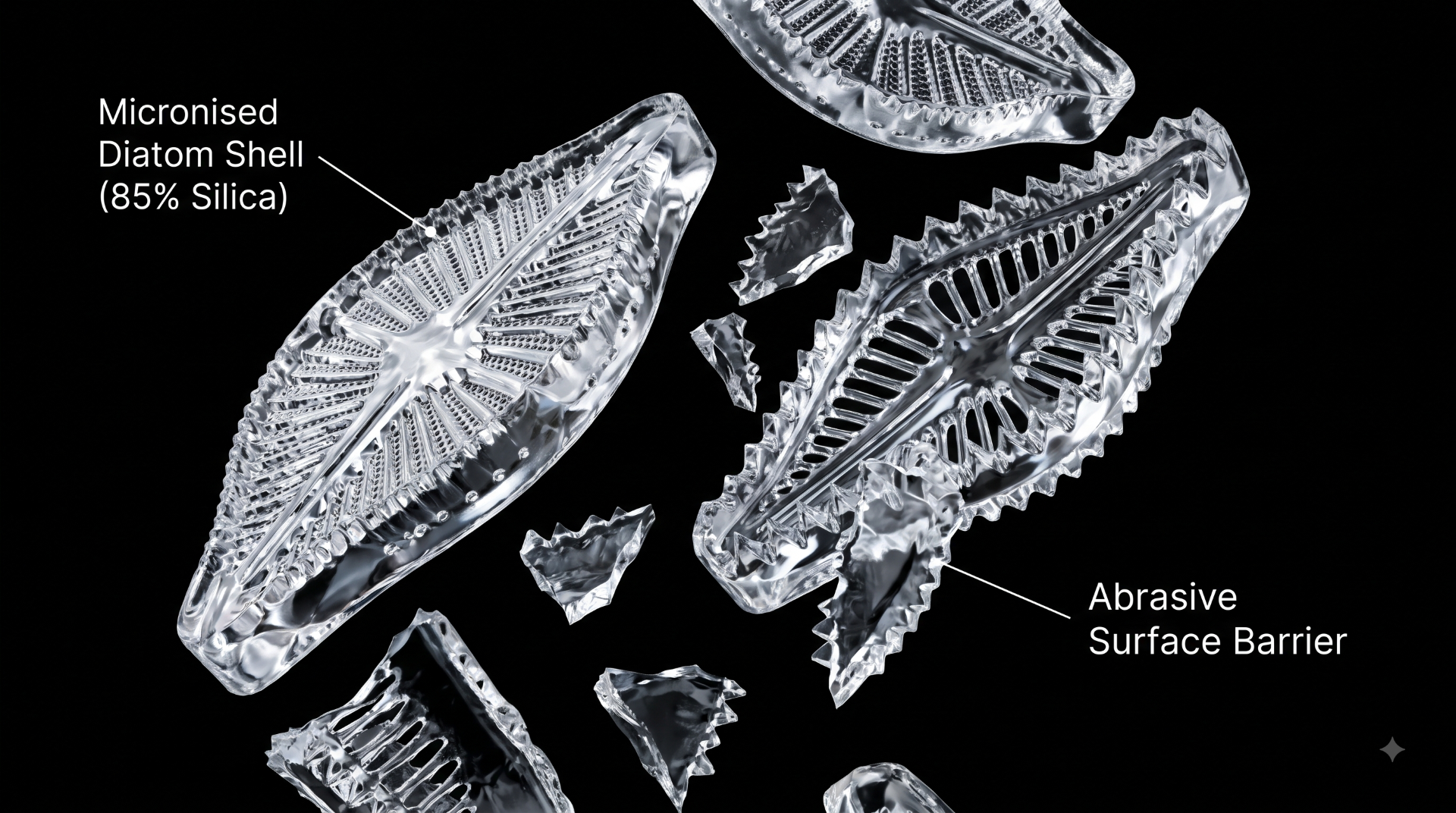
If you grind this material down to a tiny 5 microns, it becomes rapidly plant available. Interestingly, it also retains this abrasive quality. DE is registered to control grain weevils during storage in the silos, because it compromises the insects' protective layer, causing them to dehydrate and die.
Even when you have micronised these tiny razor blades, this abrasive feature remains, and it can be a great tool to dissuade caterpillars or even fruit-piercing insects. The visible film from the micronised material can also provide some sunburn protection, so it can be multi-functional.
There is another finding that DE can be highly hydrophilic, to the extent that it can dehydrate the problem insect. Micronised DE remains my personal problem-solving favourite, and I use it regularly on both of my farms.
Important new finding: My agronomy team report that several growers have witnessed impressive insect control using ACC (our wood vinegar product) at 1.5% combined with Dia-Life at 1.5 %. Give it a try, and please let me know the result.
ACC is a really unique wood vinegar option, as it can be used at much higher rates than other wood vinegar products. Typically, these other products are used at dilution rates of 1:300 up to 1:500, and will burn the leaf if too concentrated. This is not the case with ACC, which can be applied at rates as high as 1:50, without burning. This effectively means six times higher delivery of the phyto-chemicals shown to dissuade insects, caterpillars, slugs and snails.
The newest addition to the NTS problem-solving stable involves an embrace of the three foundation minerals in a single formula. SiliCal-B involves a fusion of calcium, boron and silica, and it has rapidly become one of the biggest-selling fertilisers in over 50 countries. Claims from our horticulture clients include enthusiastic statements like, “This is the most productive input I have ever used”.
Strategies to increase silica solubility
Now, let’s look at options to make silica more plant available in your soil. I have already mentioned that there is a biological link that helps explain why organic growers inevitably have higher levels of soluble silica on their soil tests. One of the creatures that triggers silica solubility is a key silica-solubilising bacterium, called Pseudomonas fluorescens. This creature protects from a variety of diseases, including Take all.
We now know that glyphosate kills Pseudomonas fluorescens on contact, so perhaps that’s a link to reduced soluble silica in chemically farmed soils.
At this point, I might share something I learned from the late Hugh Lovell, a leader in the field of biodynamics.
Rudolph Steiner was way ahead of the game in his early recognition of silica, particularly in relation to photosynthesis. One of the popular biodynamic preps, 501, is based on micronised silica quartz. Steiner uses the herb, horsetail, in some formulations because it is the highest plant source of silica.
Incidentally, some BD adherents tend to view Biodynamics almost like a religion, but I am quite sure that this was not what Steiner intended. He was a brilliant man who threw some great ideas into the ring for us to work with. You can use BD principles in any system. 501 can be of real benefit in a conventional system, for example, and you could run urea and humic acid through a flow form and see a measurable increase in response.
Nutrition Farming is a functional hybrid. We can incorporate ideas from anywhere. The only stipulation relates to the question “Does nature approve?” When you apply this guiding principle, you will find that nature approves of several things that are currently considered unacceptable in certified organics, including, for example, the great benefits we see from foliar spraying urea and humic acid.
OK, enough digressions. What did Hugh share relative to silica solubility?
Well, he suggested that there is a profound link between the foundation minerals, calcium, boron and silica. He contends that if you can fertigate or boomspray boron on the soil in late winter, then that will trigger silica solubility. The silica influx will be used to build the phloem and xylem transport pathways. Then, calcium, the most immobile of all minerals, will move more easily into the plant, via these refurbished highways.
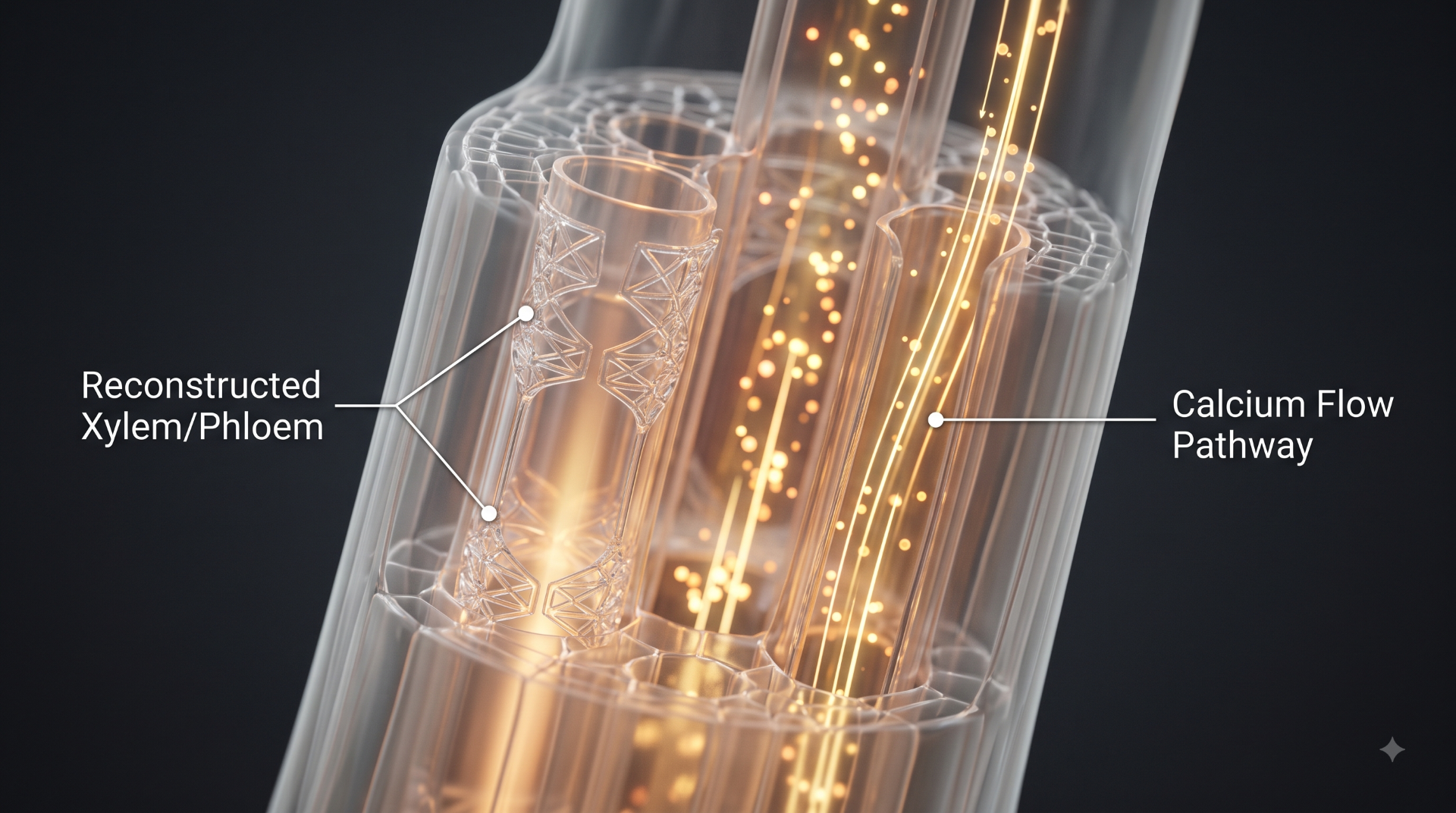
Calcium is essential to fuel the cell division for a healthy spring flush, and this boron, silica, and calcium connection is a great way to fast-track this slowpoke. We have road-tested this concept, and it most definitely works.
What other silica solubilising strategies might be relevant? There has actually been very little research in this field, and I struggle to understand why it has been ignored for so long.
We do know that silica is impacted by pH. It becomes less soluble in alkaline soils and more available in acidic conditions. Here we might argue that multi-species cover crops have a good role to play as the biological acids produced by crops like legumes and buckwheat can help solubilise silica.
Buckwheat is a very worthy inclusion in any cover crop. Buckwheat takes up many more cations than anions. When a plant takes up a positively charged cation, it must release or exude a positively charged cation to maintain its electrical balance. There would be no point in taking in a nutrient like calcium and then spitting out another cation like magnesium or potassium, to balance itself. Instead, the plant will always spit out a non-nutrient cation called hydrogen, following the uptake of any cation. Hydrogen is the acid element, and this acidity in the root zone can be a great tool to unlock tied-up calcium and phosphorus. Silica also becomes more available in that root zone acidity, and the increase in soluble phosphate can also help enhance silica solubility, as I mentioned earlier.
It is also a good idea to include silica accumulators in your cover crop mix. We can assume that these plants are selectively feeding microbes to increase the soluble silica in their root zone to accommodate their hunger for this mineral. The greatest silica accumulators, like Rice, bamboo and sugarcane, may not be an appropriate inclusion in your cover crop. However, the next level down includes plants like barley, sorghum and wheat, so they are good candidates, particularly if they are to be incorporated rather than burnt off or exported
In conclusion…..
I trust that this summary of the neglected mineral, silica, is inspiring enough to trigger some experimentation on your behalf. I assure you, you will be pleased with the crop response.
That’s it for this issue of the Nutrition Matters Blog. Wishing you all a productive spring on the farm.
We are frantically preparing paddocks for the ginger and turmeric planting at the coast farm. In Stanthorpe, it is all about setting the apple soils up for spring, and beefing up the irrigation to help counter the predicted hot and dry summer. The soil tests in the apple block suggest we need sulphur in these sandy soils. Last time I applied elemental sulphur, it was $850 per tonne. This time around, I was quoted $3200. It turns out most of the world's sulphur comes from the Middle East. If anyone has suggestions for a more cost-effective source of sulphur, please let me know.
The challenges never stop, but that’s part of the farming fun. Life is never boring.
Bye for now
Graeme
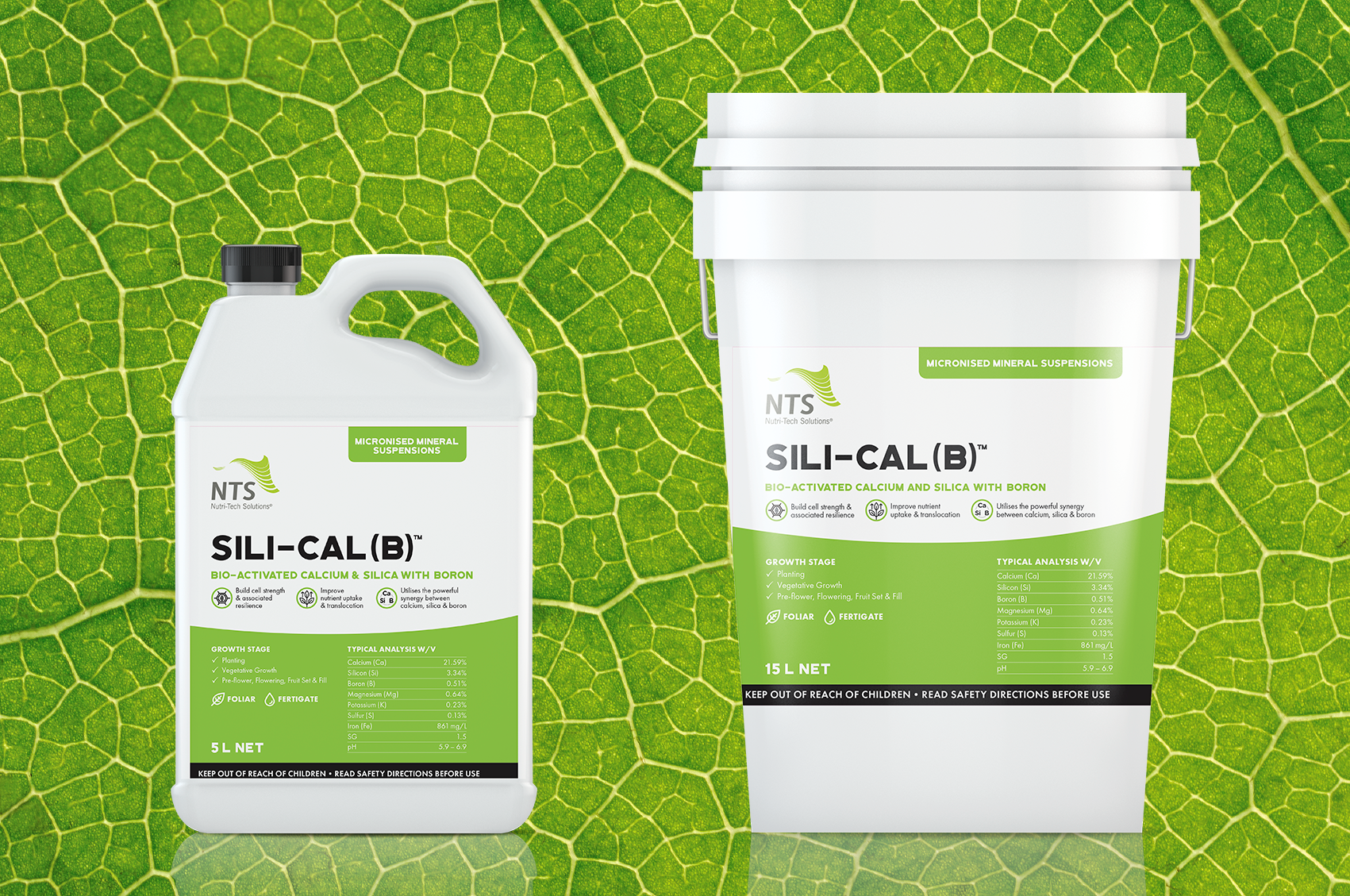
Sili-Cal (B)™
Bio-activated calcium and silica with boron.
A unique combination of three synergistic cell-strengthening elements: Silica, Calcium and Boron. Sili-Cal (B)™ is an invaluable nutritional inclusion for improving crop resilience and maximising productivity.
Product Benefits
- Key Performance
- Builds cell strength and associated crop resilience
- Improves nutrient uptake and translocation
- Utilises the powerful, yield-building synergy between the foundational trio calcium, silica and boron.
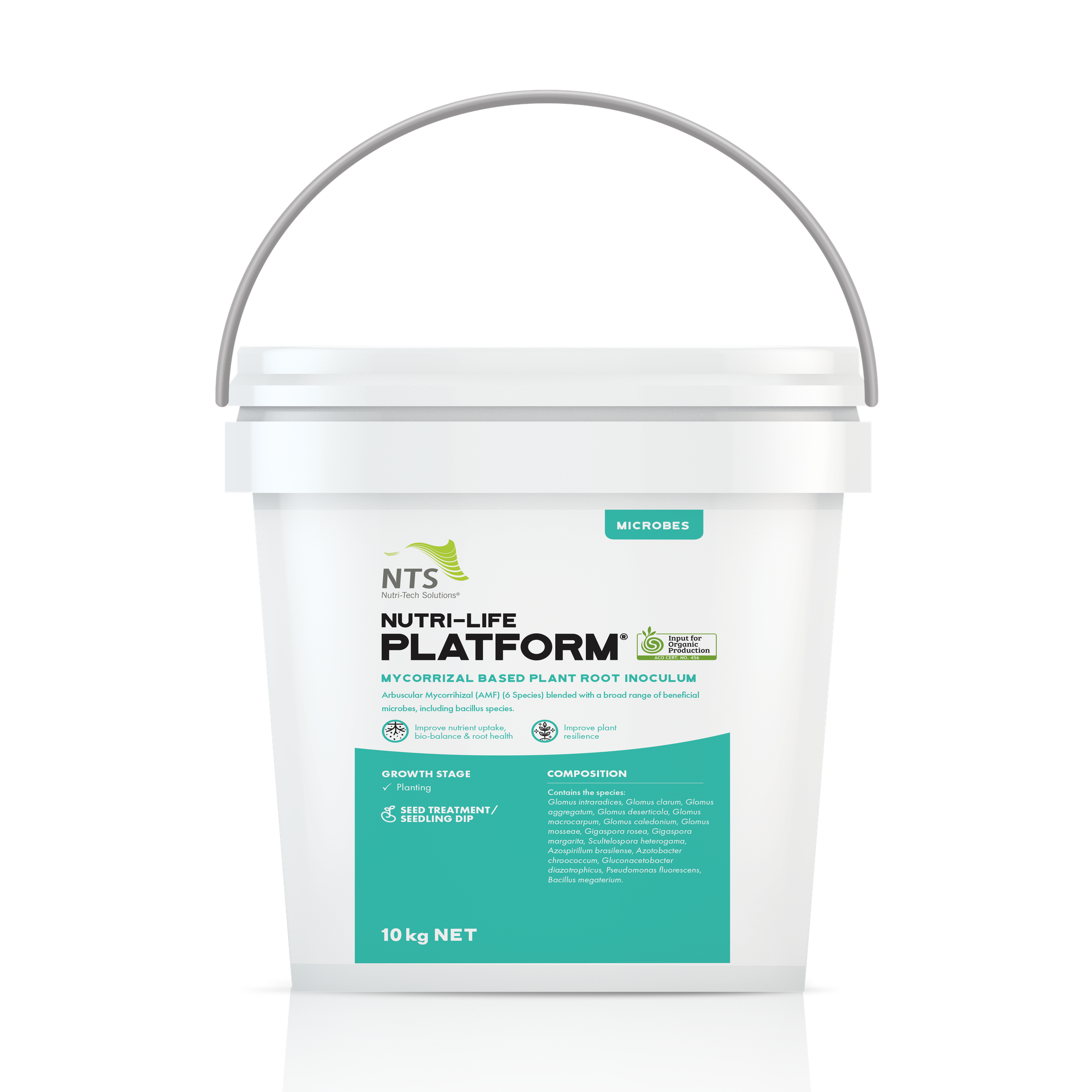
Nutri-Life Platform®
NEW AND IMPROVED BLEND
Arbuscular Mycorrhizal Fungi (AMF) (8 species) now blended with a broader range of beneficial microbes including, Bacillus species.
New and Improved Blend to be applied by seed treatment or seedling dip.
Click here for Seed Treatment Instructions with Nutri-Life Platform®.
Key Performance
- Improve nutrient uptake, bio-balance & root health
- Stable carbon production
- Improve plant resilience
Composition:
- Glomus intraradices
- Glomus clarum
- Glomus aggregatum
- Glomus deserticola
- Glomus macrocarpum
- Glomus caledonium
- Glomus mosseae
- Gigaspora rosea
- Gigaspora margarita
- Scutelospora heterogama
- Azospirillum brasilense
- Azotobacter chroococcum
- Gluconacetobacter diazotrophicus
- Bacillus megaterium
- Pseudomonas fluorescens
To order or learn more, call NTS on (07) 5472 9900 or email sales@nutri-tech.com.au.
Certificate in Nutrition Farming
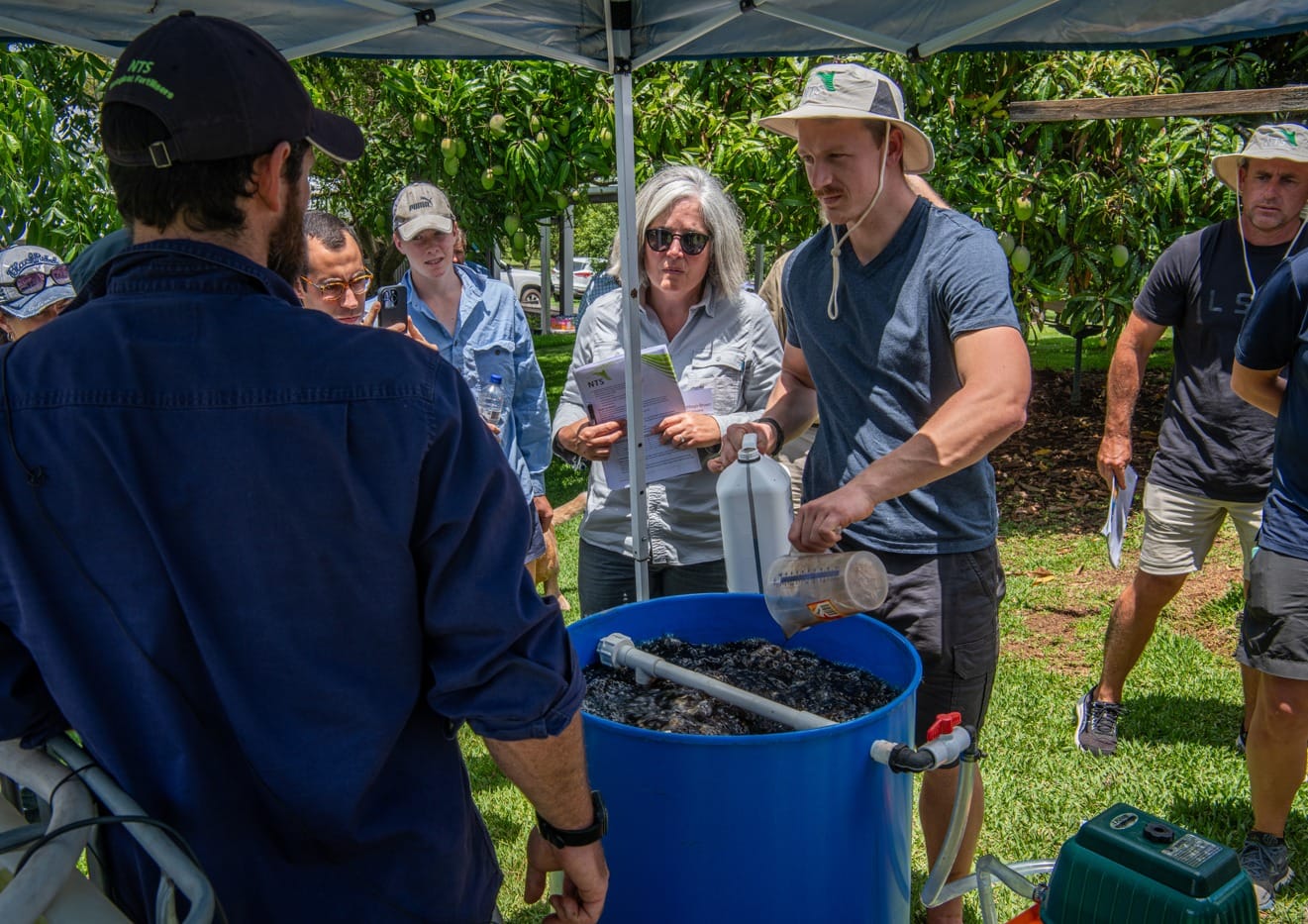
Our next iconic, five-day Certificate in Nutrition Farming® course is scheduled for November 2026: Monday 2nd - 6th.
Did you know that government subsidies are available for farmers via the Farm Household Allowance? Check it out here... https://www.servicesaustralia.gov.au/farm-household-allowance
Our last course was attended by growers and consultants from six countries. It was a wonderful learning opportunity where attendees enjoyed a wealth of education and inspiration from both our presenters and their fellow attendees. We only accept 40 bookings for these courses, so please register if you would like to attend.