🌱Countering The Nitrogen Crisis - Unlocking the Free Gift Above Your Paddock🦠

By Graeme Sait
How quickly things can change. In a few short weeks, the cost of farming has exploded, and many are scratching their heads in disbelief. How do we survive price increases and supply shortages impacting all aspects of production?
Urea has doubled in price, but, as importantly, it has become unobtainable in many regions. It’s not just the Iranian misadventure; China, a huge exporter of Urea and NPK fertilisers, has shut down exports of both. They obviously recognise that, in troubled times, they may need to look after themselves first. Or……..
Diesel, the lifeblood of modern farming, has dramatically increased in price, along with associated freight costs, and this affects everything.
Many have yet to recognise that the farm chemicals, most of which are petrochemically derived, will be the next cab off the rank in terms of cost increases.
Sometimes, the dark clouds can have a silver lining. In this case, the obvious questions relate to viable, productive alternatives. This may be your chance to discover some new strategies that may serve you, way beyond this current crisis.
In this sharing, I will highlight a productive pathway that may just save the day, while paving the way for increased future profitability.
Let’s begin with the big story, which relates to nitrogen, the most abundant mineral within the plant.
Then we will discuss some tips to reduce NPK requirements in general, while increasing the efficiency of whatever inputs we can access.
Nitrogen for free.
The first understanding here is that the nitrogen we apply from the bag is really the minor part of the nitrogen used to grow your crop. In this context, commercial N could almost be seen as a supplement. So, where does our nitrogen come from? Well, there are several pathways, which we can optimise, and they include the following:
1) Nitrogen Fixation - this important process involves both the bacteria living in the nodules beneath your legumes, and it includes the army of free-living nitrogen fixers that embrace the crop roots, awaiting their glucose gift from the plant host. We will soon discuss the limiting factors that we can reduce to optimise this access to the 74,000 tonnes of nitrogen gas hovering above every hectare. I call this “the free gift”.
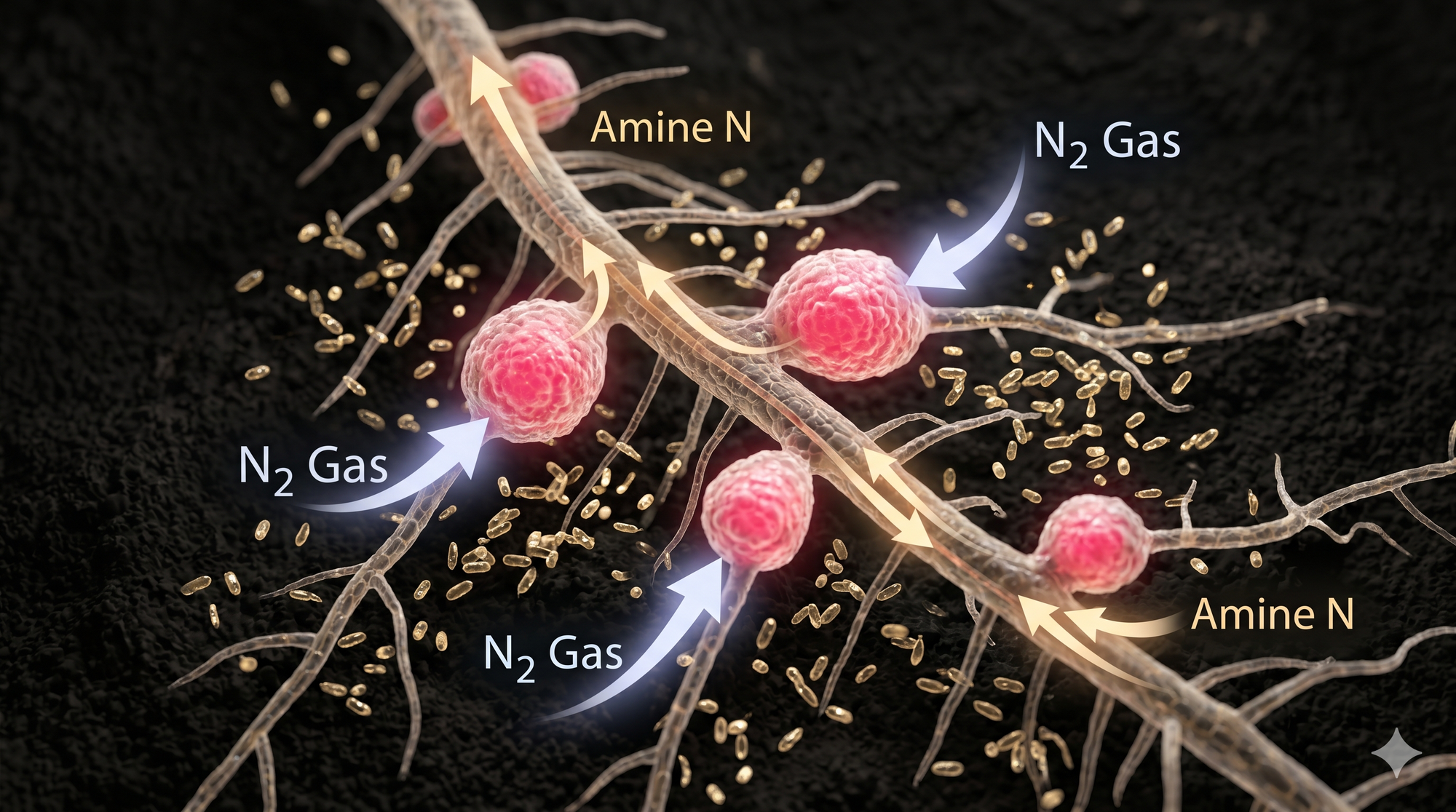
2) Nitrogen cycling - this involves the extraction of nitrogen from crop residues (Including the roots) and the biological N cycling, which is constantly happening as the soil creatures eat each other, and spit out any N that they don’t require. We will soon discuss this in relation to a simple strategy called a protozoan tea.
3) Nitrogen use efficiency - it is estimated that we are utilising less than half of our applied nitrogen, and there is a huge opportunity to address this inefficient squandering of hard-earned funds. Nitrogen leaches into our waterways and feeds the algal blooms that are decimating some coastal waters. It off-gases, and this volatility is responsible for 80% of the nitrous oxide that thickens the blanket, traps the heat and changes our world. (Nitrous oxide is 310 times more thickening the greenhouse blanket than CO2). I will highlight strategies to stabilise and magnify soil-applied nitrogen, and we will also discuss the exciting potential of foliar urea.
4) Animal manure as a cost-effective alternative - when we look at $1800 per tonne for urea, we are, in effect, speaking about a cost of just less than $4 per kg of actual N. If we are paying $60 for a tonne of chicken manure containing 3% N, we are receiving 30 kgs of N at a cost of $2 per kg. Then, we factor in the $250 value involved in the accompanying P, the K, the Ca, the sulphur, the trace minerals and the carbon, and we start to appreciate the bargain we have received. You might be thinking that these minerals are less available or less stable than their much more expensive composted alternative, but soon we will discuss a technique that delivers the equivalent stability for a fraction of the price.
Let’s now look at this quartet of options and how we can utilise them to reduce the requirement for super-expensive commercial nitrogen, which may not even be available in these troubled times.
Optimising your access to the “free gift”
There are four boxes to tick to ensure that you are maximising your access to that nitrogen abundance floating above the paddock.
1) Oxygen supply - all nitrogen-fixing organisms need to breathe. In fact, Azotobacter, the most prolific of the free-living N-fixers, is the most aerobic organism on the planet. That’s why tight, closed, high magnesium soils can require up to 50% more N to achieve the desired response l.e oxygen hungry nitrogen fixers struggle in a soil struggling for breath. That’s why leading consultants, like Gary Zimmer, suggest that “you have to earn the right to reduce nitrogen” in these tight soils. How do you “earn that right”? You improve your calcium-to-magnesium ratio. This is the mineral link to an open breathing soil, as the large ion, calcium, pushes apart the clay particles to let the air in ( flocculation). The biological solution involves improving your fungi-to-bacteria ratio. Beneficial Fungi create the larger aggregates that are the essence of crumb structure, the most desirable of environments for a living, breathing soil.
2) Fungi and legumes - both of these release suffice ie y P to ensure that ATP, the enzyme that drives nitrogen fixation, is available.
3) Molybdenum - herein lies the big missing link, as 80% of the soils we check are lacking this mineral. A foliar of as little as 50 grams of sodium molybdate and humic acid can address this issue.
4) Cobalt is missing in many soils, and it is considered mother's milk for nitrogen-fixing organisms.
A mineral-rich product like Shuttle Seven can supply good levels of cobalt and molybdenum, along with five other trace minerals.
2) Cycling your N - if nitrogen is 16% of plant protein, then it makes obvious sense that we need to break down all crop residue rapidly, to maximise that extraction of N for the next crop. Bacteria take care of the easy stuff, but the more fibrous material involves cellulose-digesting fungi, and that is often the missing link. Fungi have been killed off with over-cultivation, seed treatments, fungicides and herbicides, and they often need replenishing. This can involve inoculants, like fungi-rich, Johnson/Su extracts or Trichoderma inoculums. However, a simple starting point is to make sure that your legumes are functioning. In this case, we are talking about ensuring the nodules contain the reddish pigment called leghemoglobin. If they contain this substance, then they are fixing nitrogen while also releasing the acid exudate that is a byproduct of this successful nitrogen fixation. This acid exudate is a playground for fungi. You can measure this with a microbiometer; the fungal numbers are always much higher in Soil taken from the roots of a functioning legume
Molybdenum is the key to the red pigment and, as mentioned, it needs to be addressed more often than not.
The other simple strategy to recycle N in your soil involves something called a protozoa tea. Here’s how it works: All soil life organisms have a carbon-to-nitrogen ratio. Bacteria are the most nitrogen-hungry of all creatures, and they eat at the table first. Then, we need a process where the 400 kgs of N per hectare, contained in their trillions of bodies, is recycled. Here, we see a key role of protozoa. One watermeloned sized Protozoa eats 10,000 pea-sized bacteria each day. Bacteria have a 5:1 carbon to nitrogen ratio, while protozoa have a 30:1 ratio.
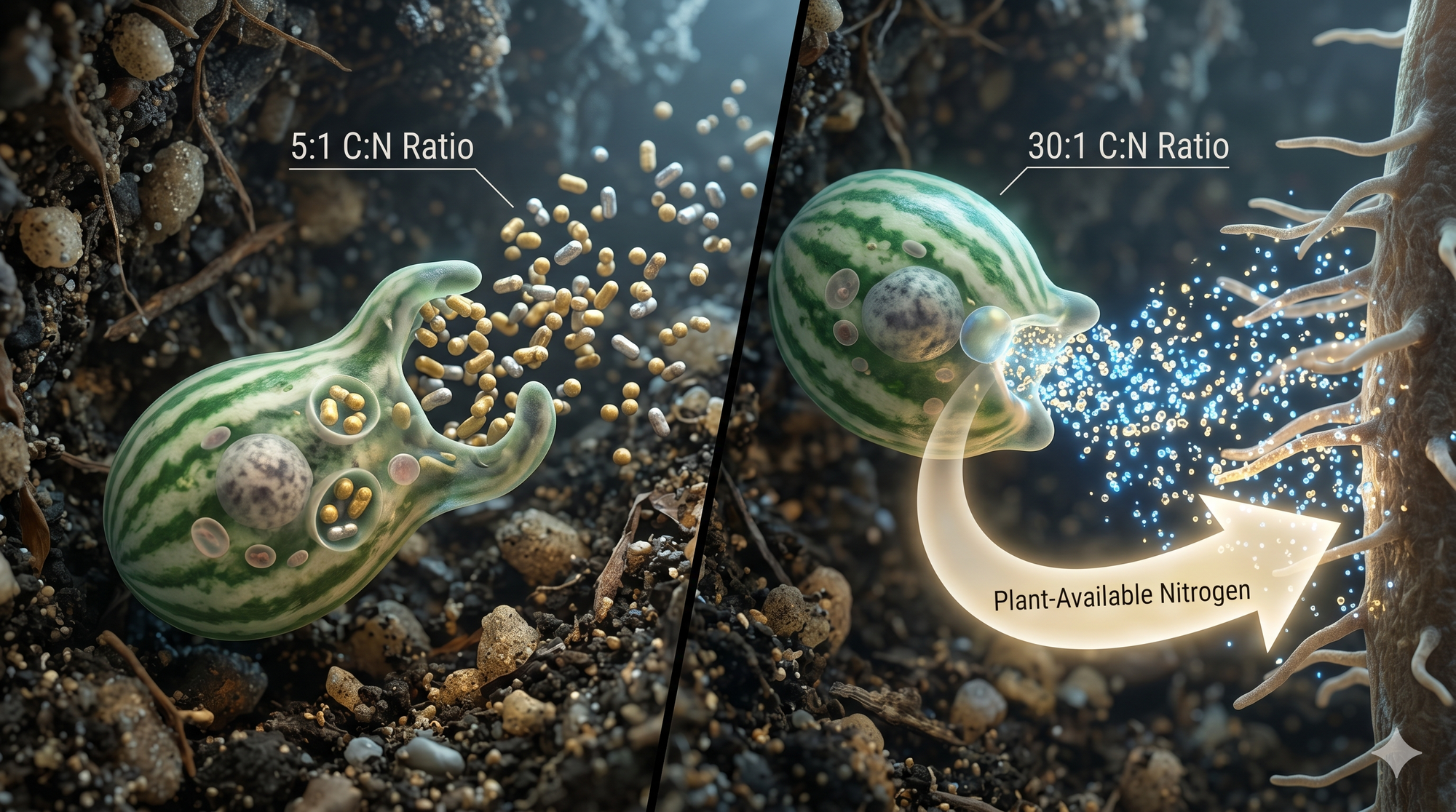
That means that to balance the carbon and nitrogen required in its body, a protozoan eats 6 bacteria to gain the 30 units of required carbon. However, it only wants 1 unit of N. Hence, the protozoa spits out 5 units of N into the soil solution with each gobbling transaction, and the plant roots sing “ You Beauty”. This is a hugely underappreciated way of optimising nitrogen cycling in your soil, and it simply involves the on-farm creation of a protozoa tea. Here’s how it’s done:
1000 litre protozoa tea recipe
- Add 50 to 80 kgs of Lucerne into an aerated 1000 litre brewing tank
- Now add 900 litres of water
- Next, we add the favourite protozoa foods involving 10 litres of Liquid fish (NutriSea from NTS is the most concentrated option) and 20 litres of molasses.
- This mix is brewed for 48 hours before sowing the mix and applying it at the rate of 30 to 50 litres per hectare.
3) Improving the efficiency of applied N - we talked about the instability of commercial nitrogen. The secret here is to combine a minimum of 5% NTS Soluble Humate Granules with soil-applied N. In the case of urea, this creates something called a urea humate, which is vastly more efficient. The urea does not immediately convert to ammonium N and then Nitrate N. You have created a slow-release form of nitrogen that does not leach or off-gas. Humic acid also increases the uptake of all minerals by 1/3, and it buffers any burning potential. It is also a powerful soil life and root growth stimulant
However, the single most efficient way to reduce N requirements involves foliar urea.
Here we are applying much less for a similar response, and there are no losses in the process. More importantly, we are choosing the most efficient pathway to protein.
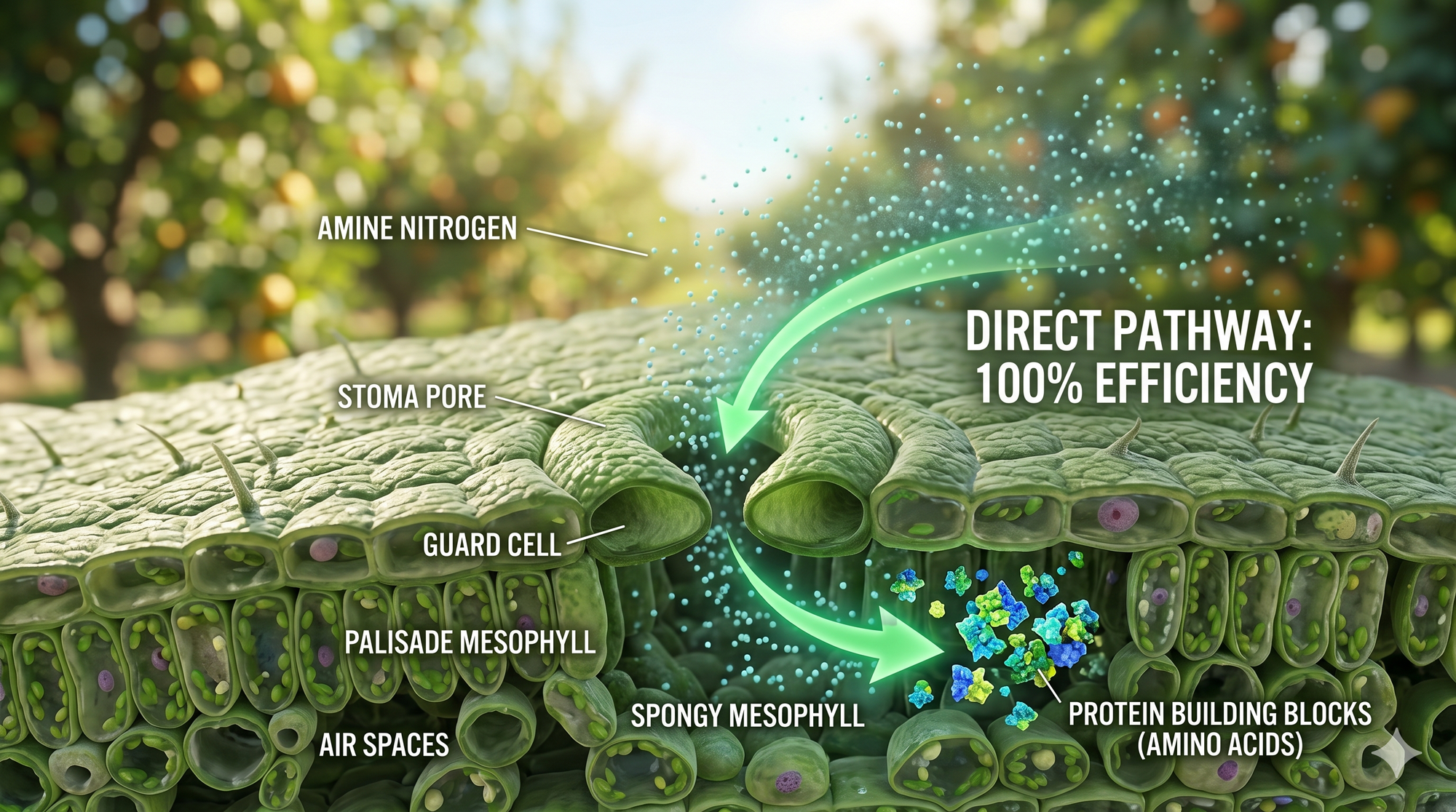
Let me explain: There are three forms of nitrogen, including ammonium nitrogen, nitrate nitrogen, and the amine form of N. Urea is uniquely that amine form.
When we apply urea to the soil, an enzyme, called urease, rapidly converts that amine form into ammonium nitrogen, then a ravaging horde of nitrifying bacteria convert most of that ammonium nitrogen into nitrate nitrogen.
Nitrate nitrogen accumulates in the leaf where it needs to be converted to protein, for the health of the plant, the animal and the human.
This involves a hugely energetic process that sucks up to 17% of all photosynthetic energy. Think of this as 17% that might have gone into your bank account at the end of the season. The creation of protein from nitrate nitrogen involves three stages, and it is the first stage, involving the nitrate reductase enzyme, that is the energy sucker.

Guess what the end product of this energy-intensive first stage is called. It’s called an amine!!!! What would happen if we bypassed this inefficient process and foliar-sprayed the urea (the amine) directly onto the leaf? Well, it converts from an amine to an amino acid, and then a protein with no losses through leaching and volatilisation, and no costly energy suck. There is simply no nitrogen delivery strategy that is more effective.
Foliar urea tips
1) 10 Kgs per hectare of urea is sufficient for vegetable crops, but most broadacre and pasture crops can handle as much as 15 kgs per hectare. However, the urea must always be buffered with humic acid to avoid any potential burn. Just one kg of NTS Soluble Humate Granules per hectare is sufficient
2) If you want to add other nutrients with the urea, then you are better advised to use FulvX as the buffering/magnifying additive. This is a 50/50 fully soluble combination of humic and fulvic acid that is compatible with everything.
3) There is compelling research that the addition of an amino acid can substantially improve protein formation when using foliar urea. We have seen some remarkable results when combining one litre of Micro Amino Drive (MAD) with urea foliars. MAD is a breakthrough product involving amino acids many times smaller than normal, and this amazing enhanced delivery provides a great outcome beyond enhanced foliar urea response. This potency relates to the fact that amino acids are intimately involved in every plant process, including photosynthesis.
I mentioned earlier that there is a trick that can stabilise and magnify the benefits of raw chicken manure. This involves something called in situ composting.
BAM (see the recipe below) can be boom-sprayed on applied manure immediately after spreading, and a super vivacious cellulose digester found in this mix, called lactobacillus planetarium, can rapidly complex and compost the applied manure. This can mean that you have created the equivalent of a $700 per tonne composted manure, in the paddock, for a fraction of the price.
Introducing Azotobacter for free N
Azotobacter are an invaluable additive if you are seeking reduced nitrogen inputs. There are forms that live on the roots, fixing nitrogen, and others that dwell on the leaf surface, plucking nitrogen from the atmosphere and delivering it directly into the plant.
The exciting thing is that both can be multiplied.
Once again, seed treatment or seedling treatment is the low-hanging fruit. I had always assumed that a seed treatment would provide a good initial response, but in the dog-eat-dog world of the soil foodweb, I had always assumed that these inductees would inevitably be eaten during the crop cycle. Recent research suggests that this is not the case. Azotobacter are super competitive in the root zone, and they can actually survive for the whole crop cycle, gifting multiple benefits throughout. These include the production of plant growth stimulants, phosphate stimulation and comprehensive disease protection.
CAUTION. There is one huge proviso here. If you adopt the moron approach here, it can seriously backfire. These oxygen lovers can steal oxygen from the roots and other surrounding organisms if over-supplied. We are talking just one litre per hectare of Nutri-Life BioN, or similar rates of the leaf-dwelling option, BioPlex.
The exciting thing is that you can now multiply these organisms on the farm to further reduce your nitrogen costs.
Here’s the recipe:
200L Azotobacter Brewing Recipe:
- 190L of sterilised water
- 2L of Bio-N
- 4L of molasses
- 3L of Aloe-Tech
- 200g of MKP
- 200ml of sea minerals
- 200g of soluble fulvic acid powder
Time: 4 – 5 days
Temperature: 25 – 30 °C
Note: it is essential that a little molybdenum is applied before, after or with your inoculum to ensure that the organisms can fix nitrogen
Magnifying your other fertilisers
Here are some invaluable tips that can further increase fertiliser efficiency:
1) Magnify and stabilise with humic acid - if you have yet to discover this strategy, you are in for a pleasant surprise. Granular NPK fertilisers are notoriously inefficient. The N component can offgas and leach. The P component lasts around six weeks in the soil before 73% locks up and is no longer available to your crop. Potassium is also highly leachable. How can we counter this increasingly expensive inefficiency?
The inclusion of 5% Soluble Humate Granules with your DAP\MAP or NPK granules transforms the performance of these key minerals.
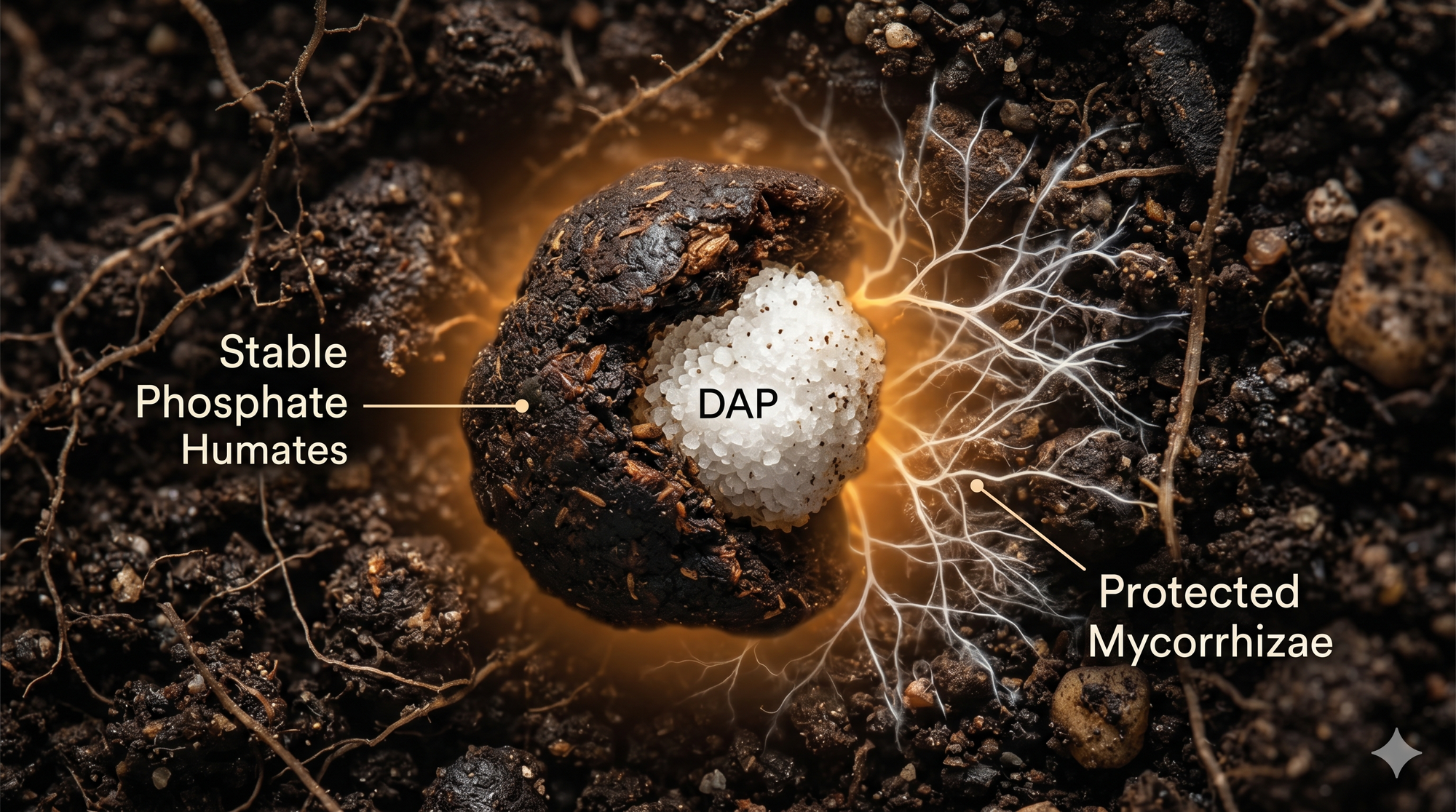
When DAP/MAP splits apart (ionises) beneath your crop, the newly released phosphoric acid can deliver an acid shock to key soil creatures. The most impacted are the vast, but fragile, hyphal networks of Mycorrhizal fungi, which are sizzled up like putting a blowtorch to human hair. The ammonium component is rapidly converted to highly leachable nitrates.
When humic acid granules are combined with the DAP/MAP granules, they dissolve at the same rate, forming stable phosphate humates and ammonium humates that remain available for the entire crop cycle. Humic acid is also renowned for its capacity to increase the uptake of that with which it has been combined. This well-researched and fascinating phenomenon is called cell sensitisation. Here, the cell membrane becomes more permeable, and the cells absorb 30% to 34% more of the P and N than otherwise.
Here is an obvious, risk- free opportunity. You can effectively use a third less fertiliser for a similar response, and the cost of the humates is much lower than the money saved on DAP/MAP.
In addition, you are gaining the multiple benefits of humic acid in the root zone, and the buffering potential of the carbon-dense humates seriously reduces the sizzling up of your mycorrhizal fungi.
What are those other humate benefits? Well, they include an auxin-like stimulation of root growth, enhancement of beneficial fungi (humic acid is the most powerful of fungal stimulants), chelation of root zone minerals, and the buffering of destructive excesses like sodium or magnesium. That’s quite a package, and it effectively comes free of charge, because you saved a third of your fertiliser costs.
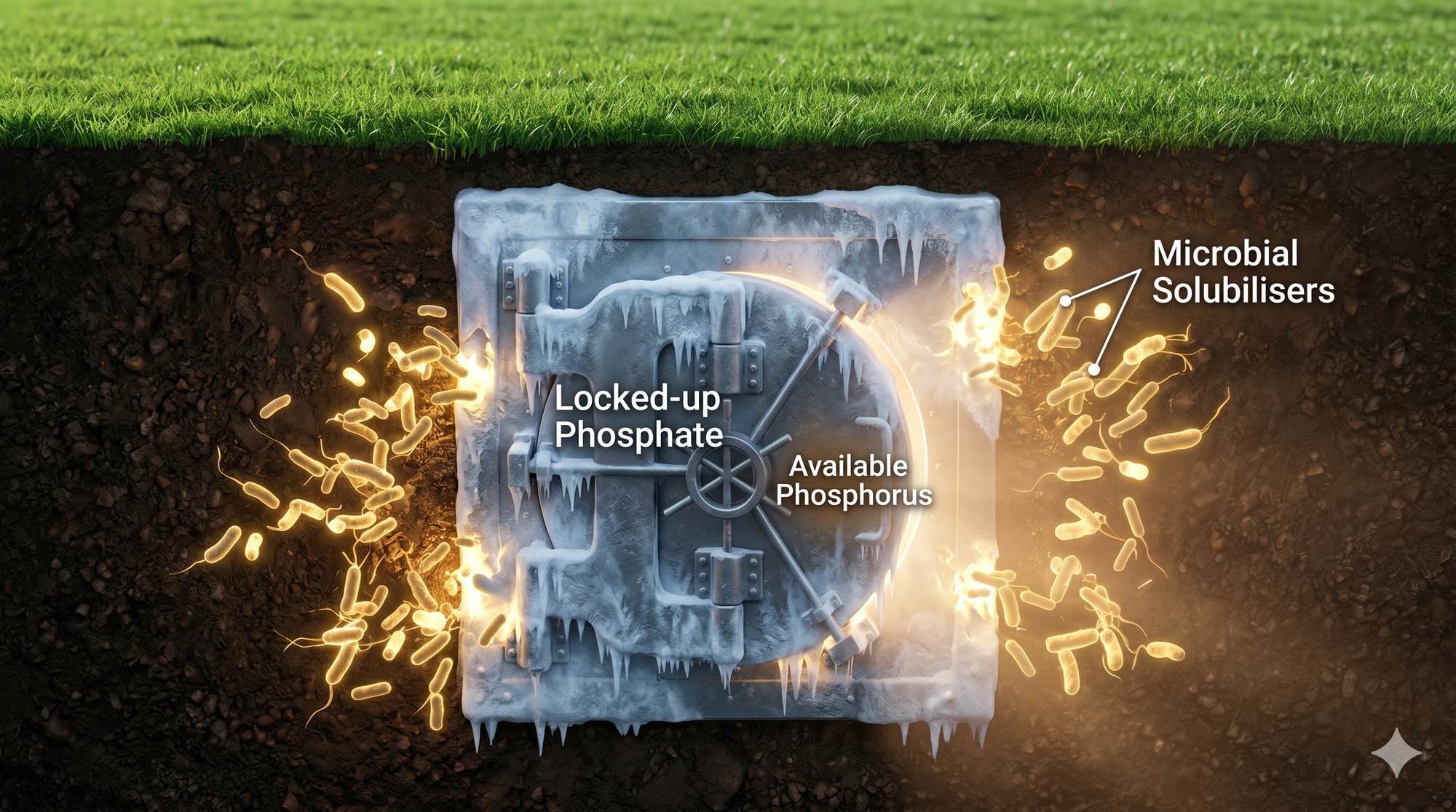
2) Release your locked-up P - I strongly advise you to invest in a tag-on soil test that measures your frozen reserves. We favour the soil lab tied to Southern Cross University in Lismore, called EAL. Their test, called a Total Acid Extract (TAE), measures the full spectrum of your locked-up bounty, including molybdenum and cobalt. If you have a history of phosphate fertilising, you will inevitably discover that there is an impressive reserve of this non-leachable mineral that has accumulated as your P fertiliser locks up. Herein lies an opportunity. If we can release some of this reserve, we can seriously reduce the need for increasingly expensive phosphate fertilisers.
I tested all blocks on my Stanthorpe apple farm soon after purchase. The previous owner had used super phosphate every year for over 30 years, and most of it was still there in that frozen bank account. I have not applied phosphate once in 6 years on this farm, and the leaf tests always reveal ample phosphate. How have we achieved this ongoing release? Well, it’s a combination of specific Brewed biology and proven phosphate-releasing inputs.
Releasing the Motherlode
There are groups of soil bacteria that specialise in the release of locked-up phosphate. They are called phosphate-solubilising bacteria (PSB). The most cost-effective way to utilise these tools is to brew them up on the farm. Let’s look at a quartet of proven performers:
1) Bacillus blends - bacillus organisms are the best researched of all beneficial bacteria. They are tailor-made for several of our problems. They handle climate extremes better than most. They adapt to sodic soils and chemically contaminated soils more successfully, and they are drought-resistant. They simply form super-resistant spores when the going gets tough, and then germinate after rain.
The NTS freeze-dried blend, called MicroForce, features five of the most potent and resilient of this bacillus workforce. All five of these little masters are powerful phosphate solubilisers. They are also capable nitrogen fixers, and they produce a suite of substances that stimulate root growth and plant immunity. One of their more fascinating claims to fame relates to their capacity to produce chitinase, an enzyme that can dissolve the outer cell walls of pest insects and diseases. The secret to inducing this enzyme during brewing is the inclusion of a chitin-rich substrate during the brewing phase. For example, the inclusion of crushed prawn shells at 2 kgs per 200 litres (1%) is sufficient to trigger chitinase production and the benefits this can bestow,
MicroForce is an inoculum you can’t just use out of the bottle. It must be multiplied for 24 hours on the farm, and we provide a specially tailored, liquid food source to simplify this process. You add one litre of Liquid Microbe Food (LMF) per 100 litres of water and 50 grams of the freeze-dried microbe powder per 100 litres of water to your brewing tank, and brew for 24 hours before use. If the creation of on-farm living fertilisers is foreign to you, then let this be an opportunity to discover a new skill. Join the thousands of farmers globally who have awoken to this super cost-effective strategy.
2) Beneficial anaerobes - these blends include multiple strains of lactobacillus, probiotic yeasts and some fermenting fungi. Several of these organisms can release locked up phosphorous, while also fixing nitrogen, building humus and fighting disease. They are the most user-friendly of all inoculums because they can be multiplied so easily on the farm. They can be left out in full sun and still remain stable for up to two years. The two most popular proven options include EM ( Effective Microbes) and the NTS product, BAM ( Beneficial Anaerobic Microbes). Here’s how simple it is to make 1000 litres of BAM on farm

1000 litre BAM brewing recipe:
What you will need:
❖ 100L of BAM concentrate
❖ 50L of molasses
❖ Clean IBC
❖ a one-meter length of garden hose.
Preparation
1. Make sure the IBC is clean, with no chemical residues, etc. This is really important with biological brews. Ideally, source a food-grade IBC.
2. Drill a 12 ml hole in the top of the tank (not through the lid). Take a one-meter length of standard 12 ml garden hose and poke one end through the newly drilled hole into the empty space at the top of the tank, ensuring this creates an air-tight seal; if not, silicone can be used.
3. Attach a two-litre plastic bottle, filled with water, to the metal frame, 2/3 of the way up the outside of the tank, using plastic ties
Getting started
4. Half-fill a 1000 litre shuttle with water before adding 100 litres of BAM and 50 litres of molasses.
Note: We typically dissolve the molasses with 50/50 water in twenty-litre drums with a hose, before adding it to the tank, so that it doesn’t clump, undissolved, in the tank bottom
5. It is always a good idea to pre-position the shuttle on concrete blocks high enough to gain access with a 20 litre bucket under the conveniently placed 2-inch outlet at the bottom of the tank.
6. Now, fill the tank with water and screw on the lid.
7. Place the other end of the meter-long length of this hose deep into the coke bottle.
8) The bottle will bubble as the BAM brews. When it stops bubbling, the brew is complete.
Alternatively, you can monitor pH. When the brew reaches pH 3.5, it is complete and will stay stable for up to 2 years.
9) This microbe brewing is best done in full sun, as one important organism in the mix requires sunlight to multiply (purple non-sulphur bacteria)
10) When you have used 900 litres of this brew, you can use the remaining 100 litres as the starter for a super low-cost second brew ( less than 10 cents a litre). Just add the 50 litres of Molasses food source, and top up the tank with 850 litres of water.
Note: We have found it best to renew the starter culture after these two brews, as it becomes less potent with each subsequent brew due to contamination and other factors affecting it.
In conclusion
I trust that many of you will recognise the potential of some of these strategies to help
counter the current crisis. This may even be a new opportunity to discover new profit-building tools for the future. At some stage, you may even be saying,” thank you, Mr Trump”, for illuminating the need for change. You have taught me that even bumbling idiocy can sometimes be of benefit.
Warm regards,
Graeme
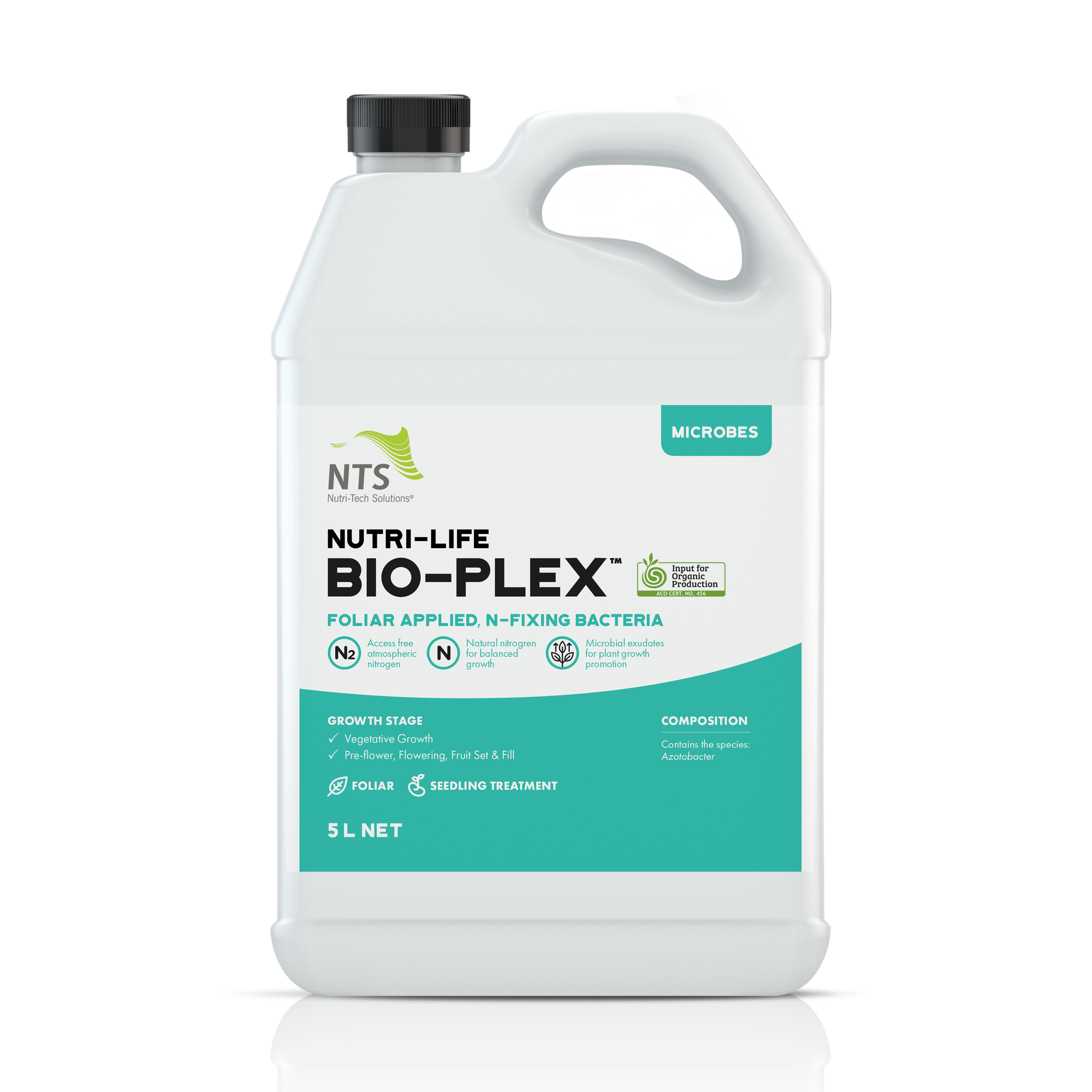
Nutri-Life Bio-Plex™
Biologically induced plant growth promotion achieved through the enhancement of leaf life.
Nutri-Life Bio-Plex™ is a foliar fertiliser that produces a complex, multi-dimensional growth response. It includes finely tuned nitrogen-fixers, which utilise carbon exudates from the leaf to fix nitrogen from the atmosphere directly into the leaf and a range of microbes that release natural growth promotants such as gibberellic acid, cytokinins, auxins and indoleacetic acid. Contains species that produce vitamins including C, E and the B group, as well as a range of organisms that secrete a substance that can help maintain the balance of beneficials on the leaf surface.
Product Benefits
- Australian Certified Organic (ACO) Registered Farm Input 456AI.
- Plant growth promotion.
- Reduced nitrogen costs.
- Higher Brix levels.
- Vitamin supplementation.
- Increased yield and quality.
- No withholding period.
Composition:
Contains Azotobacter vinelandii, Bacillus subtilis
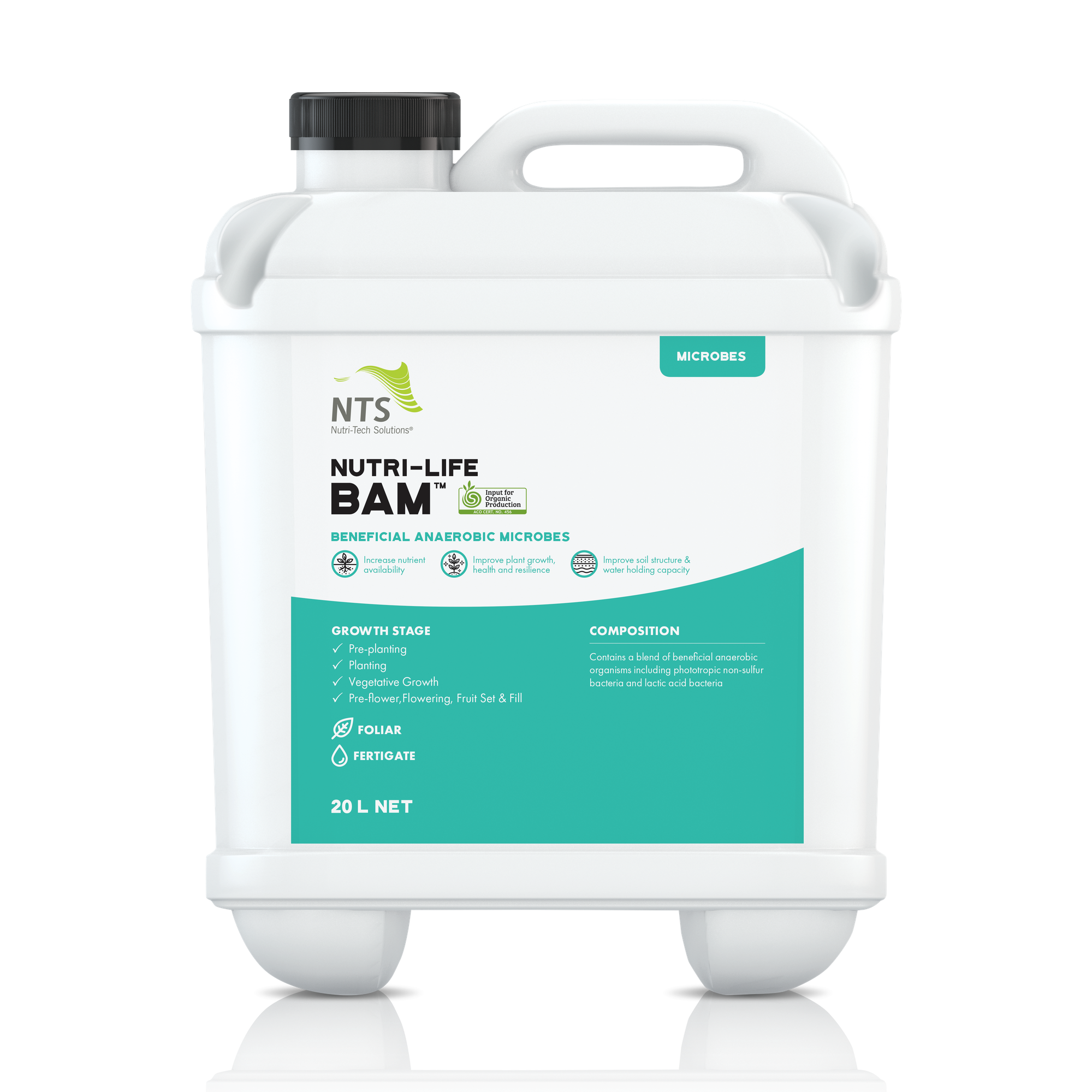
Nutri-Life BAM™
Multipurpose blend of anaerobic species for soil, compost and plant health.
This breakthrough probiotic blend contains lactic acid bacteria and purple non-sulphur bacteria, plus beneficial yeasts and microbial exudates.
Click here for Seed Treatment Instructions with Nutri-Life BAM™.
Key Performance
- Improve plant growth, health & resilience
- Increase nutrient availability
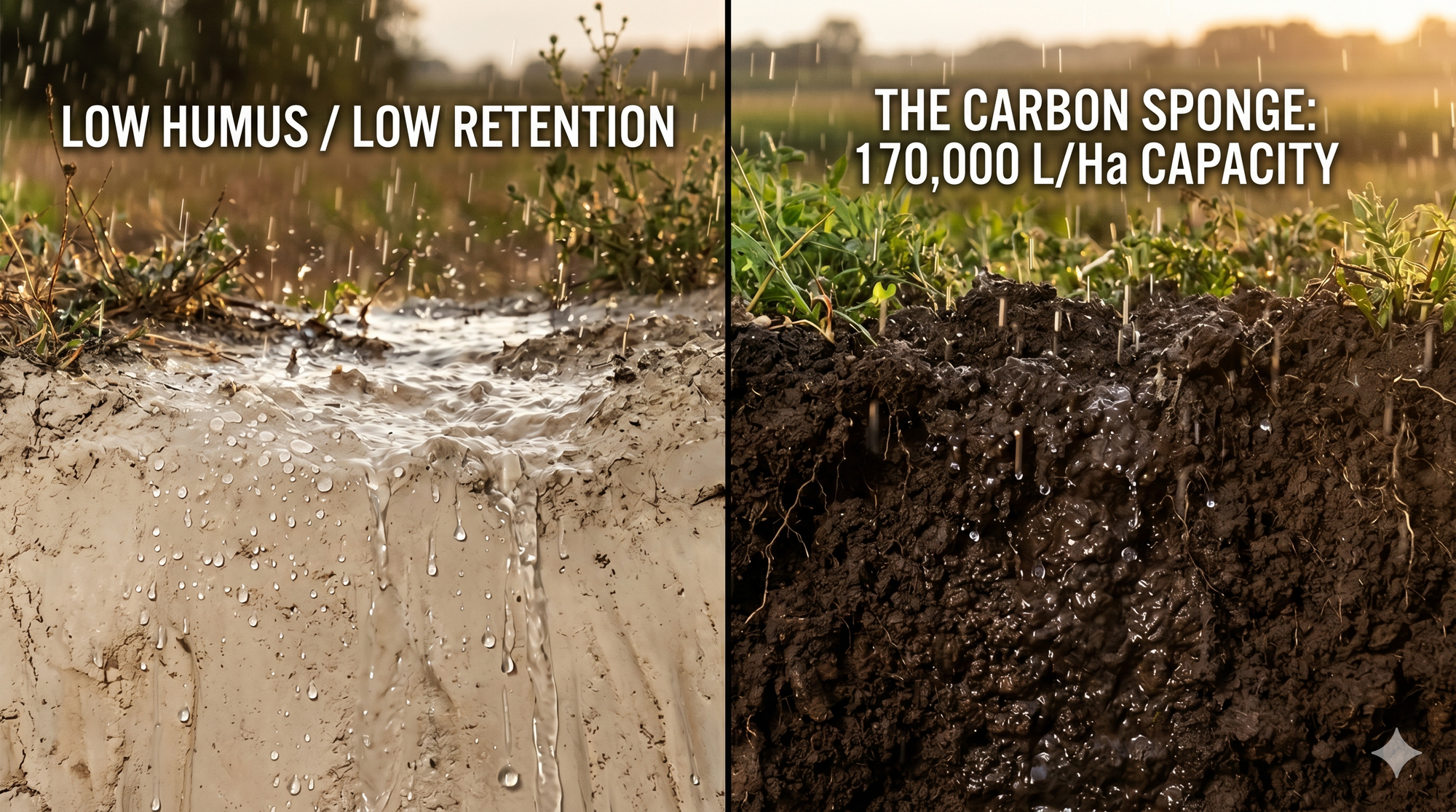
- Improve soil structure & water holding capacity
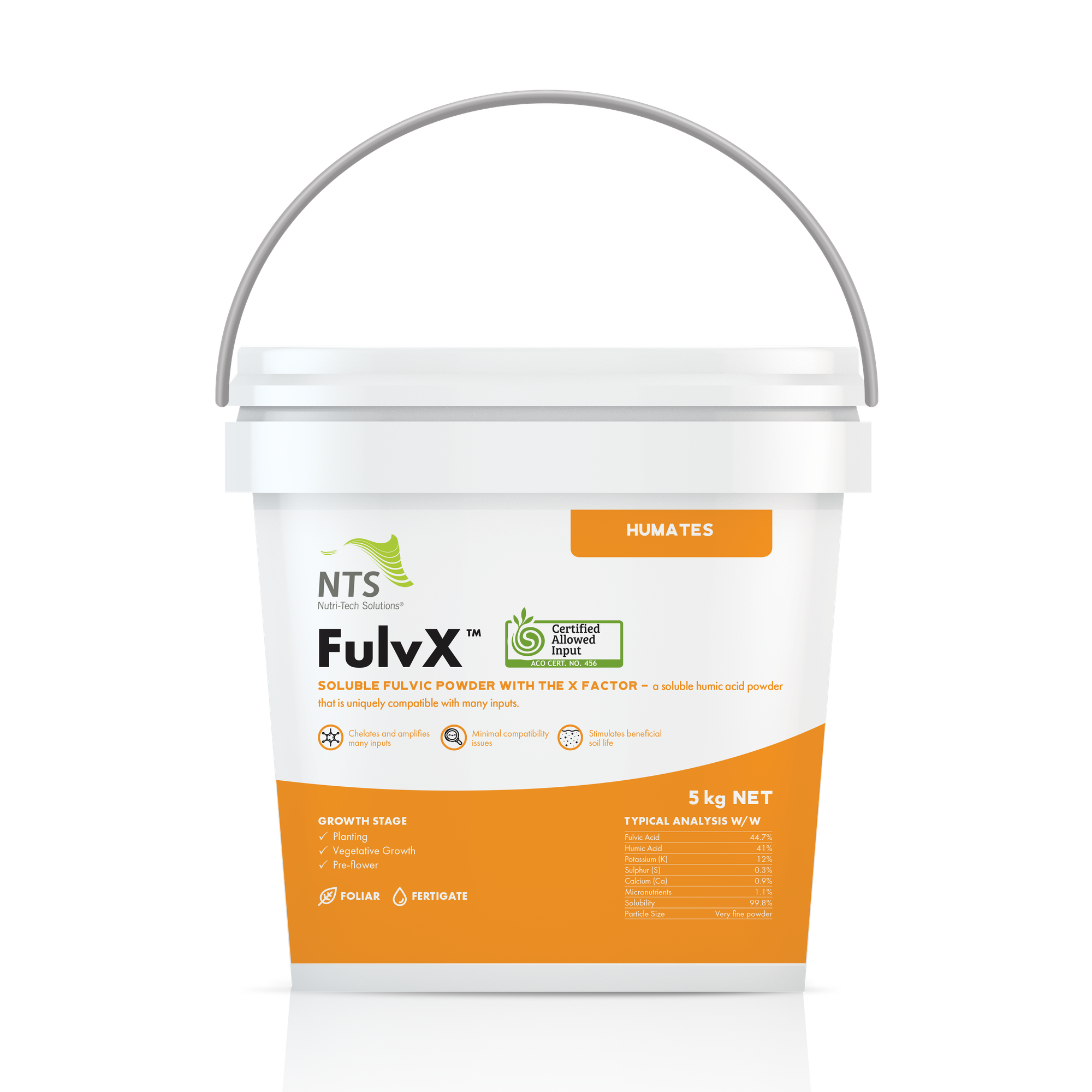
NTS FulvX™ Powder
Soluble Fulvic Powder (from leonardite) with the X factor - a highly soluble humic acid powder that is uniquely compatible with most inputs.
It is highly soluble, ACO-approved and completely versatile. It can be used with phosphate-, sulphate-, or nitrate-based inputs, in liquid injection, or as foliar—the perfect additive for fertigation to stabilise and amplify almost all fertiliser inputs.
NTS FulvX™ Powder delivers a wide range of benefits,
- Chelation - Both humic acid and fulvic acid increase nutrient uptake via cell sensitisation.
- Hormone-like stimulation - Both humates are well documented to deliver a pronounced plant growth response that closely resembles the three key phytohormones driving many plant processes: auxins, cytokinins and gibberellins.
- Increased P availability - Humic acid and fulvic acid have both been shown to increase the release of phosphate from locked-up sources.
- Abiotic stress tolerance - In a warming world where environmental extremes abound, there is no shortage of plant stress, and anything that can help counter this stress becomes an essential tool.
To order or learn more, call NTS on (07) 5472 9900 or email sales@nutri-tech.com.au.
Certificate in Nutrition Farming
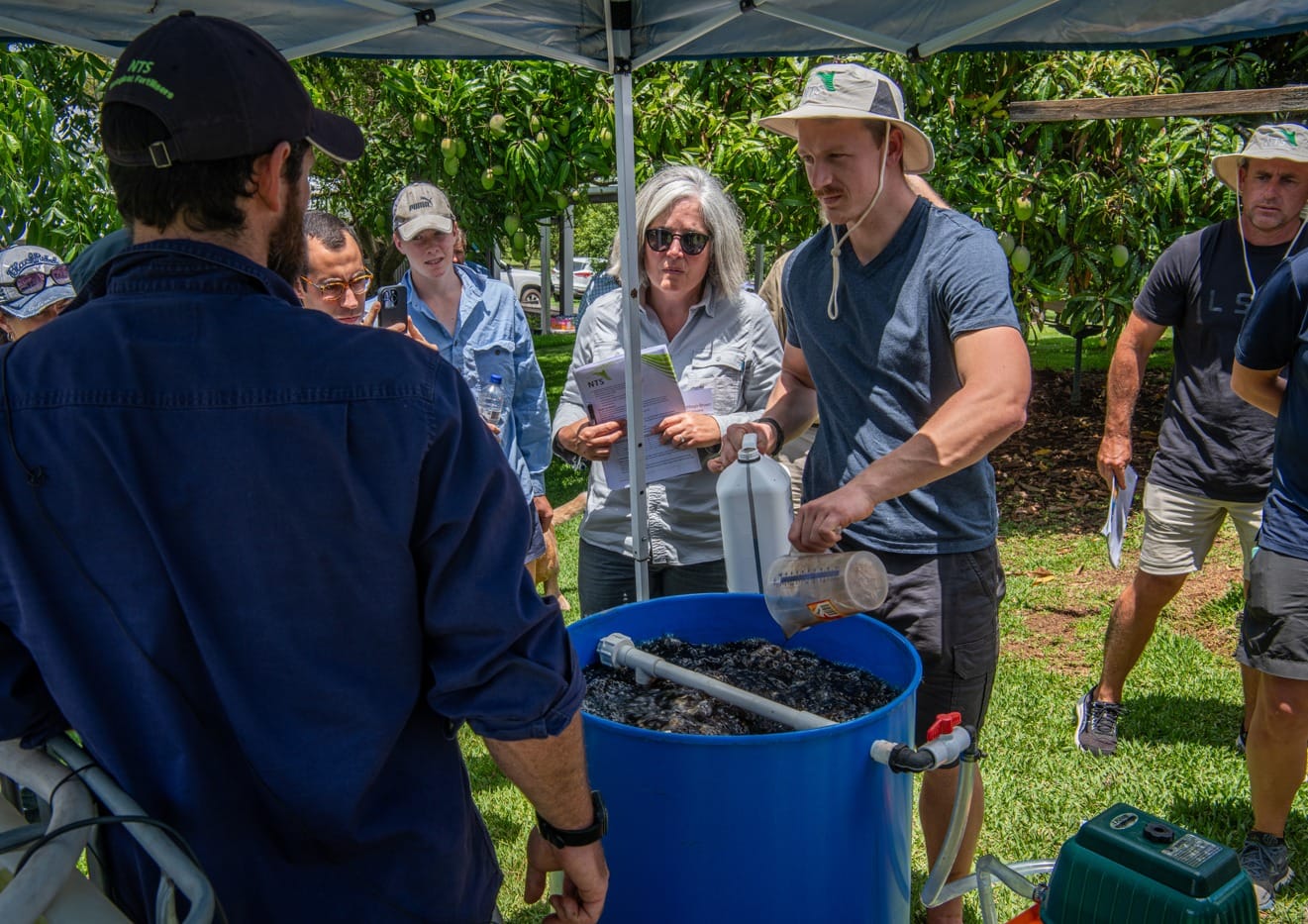
Our next iconic, five-day Certificate in Nutrition Farming® course is scheduled for Monday, 13th - 17th July 2026.
Did you know that government subsidies are available for farmers via the Farm Household Allowance? Check it out here... https://www.servicesaustralia.gov.au/farm-household-allowance
Our last course was attended by growers and consultants from six countries. It was a wonderful learning opportunity where attendees enjoyed a wealth of education and inspiration from both our presenters and their fellow attendees. We only accept 40 bookings for these courses, so please register if you would like to attend.